
Source: Pexels
An izakaya starts before you order: a small dish lands, its line already on the bill, and the staff wait on one decision: what you're drinking. The rest runs on rules most shops print in Japanese, somewhere you haven't looked.
- Table charge
- A few hundred yen a person
- Drinking age
- 20
- Indoor smoking
- Banned since 1 Apr 2020
1The rooms that all call themselves an izakaya
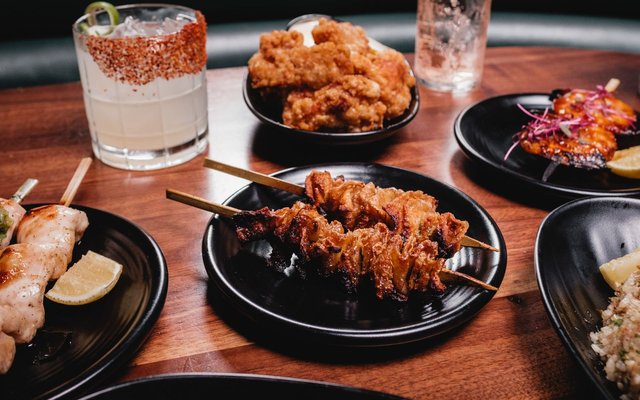
An izakaya is a drinking place that serves real food: the order of events sets it apart from a restaurant. You sit, the staff ask what you want to drink, and food comes in small plates over a couple of hours, not courses. Rice, noodles and dessert come last, once someone decides the drinking is done.
Almost everything is shared, and portions are small on purpose. A yakitori order at the chains is two skewers on one plate, so a table of six orders six. A salad, a fried dish and three plates off the grill is a normal pace for four; ordering all at once isn't, because the kitchen sends plates as they're ready.
| The kind of place | What it's | What it does to the bill |
|---|---|---|
| Chain izakaya | Uniform menu, tablet ordering, private rooms for large groups, and branches in the hundreds nationwide | Prices and rules are published online. A table charge is billed per person at most of them |
| 大衆酒場 taishu sakaba | An old-style neighbourhood bar: a counter, a few tables, a menu pasted to the wall, one or two regulars holding court | Cheaper plates than a chain, and the same table charge |
| 立ち飲み tachinomi | Stand-up drinking, often a converted liquor shop. Order and pay as you go, then give the spot back | No table charge as a rule, and no seat to keep |
| 横丁 alleys and 屋台 stalls | The alley districts and the street stalls: eight or twelve seats, one or two specialities, whoever is next to you | Table charge at the alley bars; Fukuoka's stalls trade under a city licence instead |
2The table charge, and why it lands before the food
The dish nobody ordered has a name. お通し (otoshi) is how an izakaya charges for the seat: it comes with the first round, it's billed per person, and its size tracks the class of the shop, not the food. Think of it as a cover charge on a plate.
Japan's consumer affairs centre explains it in those terms, and adds the point to remember: if a separate チャージ line turns up on the bill, or the figure looks wrong, ask the staff before you pay, not after. Asking at the table is normal.
If you would rather not have it, say so while it's untouched: once you eat any of it, it counts as accepted. A shop that runs the charge as a condition of entry may say no — its call. The chains that bill nothing for the seat are the simplest, and the cheapest is a flat-price yakitori chain where every plate and drink costs the same.
Keep reading How much does Torikizoku cost in 2026?
Where the charge is a fixed fee rather than a plate, it's a small-bar district arrangement. The Shinjuku association that runs Golden Gai markets its festivals as ノーチャージ with drinks from ¥500 a glass — what the ordinary night there costs before you order.
3The first drink
The first order is a drink, and the one part of the evening with a script. Beer arrives fastest and costs the least of the alcoholic options at most chains, so a group that just sat down orders it without reading the list. The Japanese for it, とりあえず生で, is worth having in your mouth: the staff hear draft beer to start and come back for the food order.
Nobody has to drink alcohol. Every chain runs a soft-drink list, the tablet has a page for it, and one person on tea all night is unremarkable.
| On the menu | Say it | What arrives |
|---|---|---|
| 生ビール | nama biru | Draft beer. 中ジョッキ is the standard mug, 大ジョッキ the large one |
| ハイボール | haiboru | Whisky and soda. 角ハイ is the same drink made with Suntory's Kakubin |
| チューハイ / サワー | chuhai / sawa | Spirits, soda and usually fruit. Lemon, lime and yuzu are the safe orders |
| 日本酒 | nihonshu | Sake, by the glass or the bottle. 熱燗 is served hot, which is what winter asks for |
| 焼酎 | shochu | Stronger than sake. Ask for ロック on ice, 水割り with water or お湯割り with hot water |
| 梅酒 | umeshu | Plum wine, sweet and usually ordered ソーダ割り with soda or on ice |
| ウーロン茶 | uroncha | Oolong tea, the default soft drink, and the reason nobody notices you sitting out a round |
4Ordering, and the words that get you out the door
At the chains you order on the table tablet: pick a category, pick the dish, set the number, send. The categories run from Sapporo to Naha, and the panel carries Japanese, English, Korean and Chinese at the big operators. Plates come out in the order the kitchen can make them, so fried food lands after the cold plates.
Smaller rooms work the old way: you say what you want, staff write it in kana, and the bill builds up on a slip at the table. Both run on the same handful of phrases — the whole language you need for the night.
| When | Say it | What it does |
|---|---|---|
| Sitting down | とりあえず生で | Draft beer to start, while you work out the food order |
| Ready to order more | すみません、注文お願いします | Excuse me, we would like to order. The most useful sentence of the night |
| Pointing at the menu | これをください | This one, please. Works on a picture menu and on a tablet that has defeated you |
| The bill | お会計お願いします | The bill, please. At chains you take the slip to the register instead |
| Paying separately | 別々でお願いできますか | Could we pay separately? Ask early rather than at the register |
| Leaving | ご馳走様でした | Said on the way out, to whoever is behind the counter |
But two bits of etiquette: when somebody tops up your glass, hold it up. And when the staff ask about clearing a plate, the answer is usually yes, finished 枝豆 or not.
5All you can drink, and the bell that ends the night
The set course is both halves of a night in one price: food and drink, unlimited, for a fixed time, usually two hours. The clock starts when the group sits, not at the first drink, and ordering stops before the session ends. Most people are caught out in that gap, so ask when the last order is called.
Torikizoku's plan shows the terms: two hours of unlimited food and drink, four adults minimum, booked by telephone the day before, last order twenty minutes before the end, and the kamameshi an hour before the end, since the pot needs about half an hour. Outside food or drink is banned, leaving food behind is charged, and a group made up entirely of under-20s is refused outright.
Every item on that menu is the same price, drinks included, so the flat-price plan only pays if your table would order a lot in two hours.
6The door rules: age, smoke and cameras
The drinking age is 20, and the statute is blunt: no alcohol under 20. The age of majority fell to 18 in April 2022, and the drinking age didn't move, so the door says 20 rather than 18. Operators must confirm age and refuse anyone under it, so bring the passport if you're near the line. Groups of under-20s are turned away at the chains; with a parent along, the alcohol stays off that side of the table.
Smoking went the other way, and older guidebooks get it wrong. Since 1 April 2020 restaurants have been non-smoking indoors by law, smoking only in a room built for it: a booth where eating and drinking aren't permitted, or a heated-tobacco room where they are. A restaurant existing on that date, with seating of 100 m² or less and capital of ¥50 million or less, could keep its smoking — which is why a cramped old izakaya can smell of cigarettes while the chain across the road is sealed. Under-20s may not enter a smoking room at all, staff included.
The camera is the third rule, and the alley districts are strict. Golden Gai's association states the whole district is a private road and that photography on the street, or of the district itself, requires permission; Omoide Yokocho publishes its own photography terms. Inside, the door sign decides, and plenty of small bars ban photographs outright — a regular next to you hasn't agreed to be in the frame.
Two more door rules. Most izakaya don't allow food or drink from outside, which the chains write into their course terms, and a packed row of seats in a small bar isn't the place for a suitcase. Neither rule is hard once you hear it.
Keep reading Can you book a Japanese restaurant without Japanese?
7Where to drink
Five districts earn the walk, each a different kind of night. Two are warrens of tiny bars in Shinjuku, one a day-drinking street in Asakusa, one four office buildings joined underground in Osaka, and one a licensed row of street stalls in Fukuoka.
Omoide Yokocho, Shinjuku
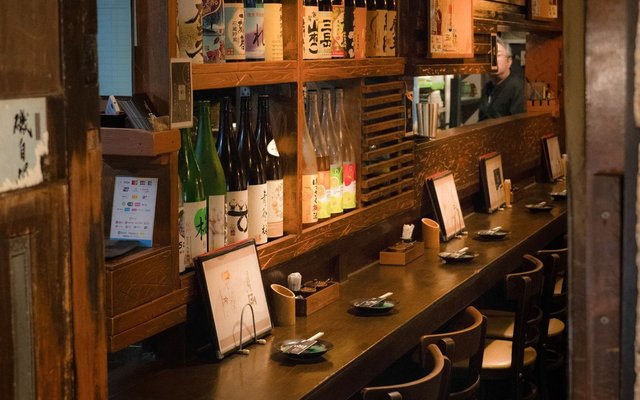
About 60 bars and restaurants sit in roughly 80 premises on about 2,000 m² beside the west exit of Shinjuku Station, most grilling skewers and offal. It began as an open-air market on the post-war burnt ground, and the lanes still show it: counter seats, a few tables, one person cooking and serving. Prices are lower than the station side of the street.
Shinjuku Nishiguchi Omoide Yokocho 新宿西口思い出横丁
- Address
- Nishishinjuku 1-2, Shinjuku-ku, Tokyo 160-0023 · Map
- Phone
- +81 3-3364-3235, the Shinjuku West Exit shopping-street association that runs the district
- Hours
- No gate and no closing time; each bar sets its own hours, and most of them run into the night
- Closed
- Each bar sets its own closing days
Golden Gai, Shinjuku
Six lanes of two-storey buildings a five-minute walk north of Omoide Yokocho, holding a few hundred bars of four to eight seats each. The rooms have themes and regulars who have drunk there for decades, and almost none take walk-ins from a group of five. The table charge is the norm here, drinks start around ¥500, and the whole district is a private road.

Source: Pexels
Shinjuku Golden Gai 新宿ゴールデン街
- Address
- 1-1-6 Kabukicho, Shinjuku-ku, Tokyo 160-0021 · Map
- Phone
- Not published; the district association takes enquiries through its own site
- Hours
- No gate and no closing time; each bar sets its own hours and most open in the evening
- Closed
- Each bar sets its own closing days
Koen-hondori, Asakusa
The street most people call Hoppy Street keeps its official name, Koen-hondori, and its trade is daylight drinking at pavement tables. The order is a bottle of Hoppy, the Tokyo beer-and-shochu mix that gave the street its nickname, and a bowl of beef-tendon stew. The shops open through the afternoon, the street fills on a sunny Saturday, and the easiest to walk into with a family.
Koen-hondori shopping street, Asakusa 公園本通り商店街
- Address
- Asakusa 2-chome, Taito-ku, Tokyo 111-0032 · Map
- Phone
- Not published
- Hours
- No gate and no closing time; the bars open for drinking from late morning and each sets its own hours
- Closed
- Each bar sets its own closing days
The Ekimae buildings, Osaka
Four blocks of offices a few minutes south of Osaka Station, joined to each other and the station's concourse, with the cheap eating in the basements. Hundreds of bars run off corridors that still look like the 1970s, the prices are the lowest here, and the clientele is local rather than visiting. Start in the first building and walk down; the corridors connect all four.
Osaka Ekimae No. 1 Building 大阪駅前第1ビル
- Address
- 1-3-1 Umeda, Kita-ku, Osaka 530-0001 · Map
- Phone
- Not published
- Hours
- Each bar and restaurant sets its own hours; the basements carry most of them
- Closed
- Each shop sets its own closing days
The Nakasu yatai, Fukuoka
Fukuoka is the one city where street stalls are official: the city licenses each one, and its ordinance fixes a stall's street hours at 17:00 to 04:00, set-up and pack-down included. The row along the Naka river in Nakasu is the busiest, with ten seats at the counter and one speciality per stall. Two rules come out of that text before you sit: prices must be displayed where you can read them, and the operator must show you the nearest toilet, since the stall has none.

Source: Pexels
Nakasu yatai, Fukuoka 中洲の屋台
- Address
- Along the Naka river in Nakasu, Hakata-ku, Fukuoka 810-0801 · Map
- Phone
- Not published
- Hours
- The city allows a stall on the street from 17:00 to 04:00; each stall sets its own hours inside that window
- Closed
- Each stall sets its own closing days
| Before you go out | Why it matters on this page | Check tickets |
|---|---|---|
| Tokyo hotels | The last train decides where the night ends, and Shinjuku's two alley districts are five minutes from the west exit | Trip.com Klook KKday |
| Osaka hotels | The Ekimae buildings are a three-minute walk from the station's south side, so the walk home is short even at midnight | Trip.com Klook KKday |
| Japan eSIM | Both alley districts are a maze of lanes, and the maps on your phone are how you find the way out at 01:00 | Trip.com Airalo eSIMania |
| Left-luggage storage | A night that starts at 17:00 and ends after the last train needs somewhere for the bag | Tokyo Osaka |
8Questions and answers
The table charge, the age rule and the bill, in the order a first night asks them.
What is otoshi, and do I have to pay it?
Otoshi is the small dish that arrives before you order, and it's the shop's table charge. It's billed per person, comes with the first round, and the staff won't take it off because you didn't ask. You can decline it while it's untouched, but a shop that runs it as a condition of entry may refuse you instead.
Do I have to order a drink to eat at an izakaya?
Nearly every izakaya expects each person to order a drink, and chains selling set courses put the minimum in the terms. Alcohol isn't required: every chain keeps a soft-drink list, and oolong tea or a non-alcoholic cocktail counts. Drinking nothing at all is the one order that gets noticed.
Can I refuse the table charge?
You can say no while it's untouched, and the shop may leave it out. Once any is eaten, it's accepted and the charge stands. If a separate charge line appears next to the otoshi, or the figure looks wrong, ask the staff before paying.
Is smoking allowed in Japanese izakaya?
Only in a room built for it. Since 1 April 2020 restaurants have been non-smoking indoors, with smoking confined to a booth or a heated-tobacco room. Those already existing on that date, with seating of 100 m² or less and capital of ¥50 million or less, may keep a smoking area, which is why some older izakaya still allow it at the table. Under-20s may not enter a smoking room.
Can under-20s go into an izakaya?
They can go in with somebody 20 or over, but can't drink. The drinking age is 20 and didn't change when the age of majority fell to 18 in April 2022, so operators check ID and refuse to serve anyone under it. A group of under-20s is turned away at the chains.
How does an all-you-can-drink course work?
It's a food-and-drink package for a fixed time, usually two hours, and the clock starts when the group sits, not at the first drink. The last order is called before the session ends, so ask the time when you order. Some plans need a minimum number of adults or a booking the day before.
Can we split the bill, and do I tip?
Splitting is normal, and the phrase to use is 別々でお願いできますか. Ask when you order, not at the register, because a small bar with a hand-written slip does it happily while a busy chain needs to know early. Tipping isn't part of the transaction, and coins left on the table are more likely to be chased down the street than kept.
Keep reading
Sources
- 二十歳未満ノ者ノ飲酒ノ禁止ニ関スル法律 — the drinking-age statute, current revision in force since 1 April 2022: anyone under 20 may not drink alcohol, and operators must refuse to serve them and confirm age (e-Gov, law id 211AC1000000020)
- 国民生活センター (National Consumer Affairs Center) — the visitor hotline's explanation of お通し as a table charge, and its advice to check the amount or a second チャージ line with staff before paying (kokusen.go.jp)
- 厚生労働省 受動喫煙対策 — 原則屋内禁煙 since 1 April 2020, the 喫煙専用室 and 加熱式たばこ専用喫煙室 standards, the transitional rule for existing small restaurants, and the bar on under-20s entering a smoking room (jyudokitsuen.mhlw.go.jp)
- 鳥貴族 — the トリキ晩餐会 terms (two hours, four adults minimum, last order 20 minutes before the end and the kamameshi 60 minutes before that, no outside food or drink), the entry rule for groups of under-20s, and the flat ¥410 price list (torikizoku.co.jp)
- 新宿三光商店街振興組合 — Golden Gai's address, the rule that photography on the district's private roads requires permission, and the festival copy showing drinks from ¥500 with no table charge (goldengai.jp)
- 新宿西口商店街振興組合 — Omoide Yokocho's own count of about 80 premises and some 60 bars and restaurants on about 2,000 m², and the association's address and telephone number (shinjuku-omoide.com)
- 大阪駅前第一ビル — the building's address and the per-shop hours model for the four buildings joined underground (1bld.com)
- 浅草においでよ! — the official Asakusa shopping-street site for 公園本通り商店街: the outdoor drinking on the street and the shops that open through the afternoon (asakusanioideyo.com)
- 福岡市屋台基本条例施行規則 — the 17:00–04:00 street-occupancy window for a yatai including set-up and pack-down, the duty to display prices where the customer can see them, and the duty to show where the toilets are (city.fukuoka.lg.jp)
- Fares and fees are current as of 17 October 2026.