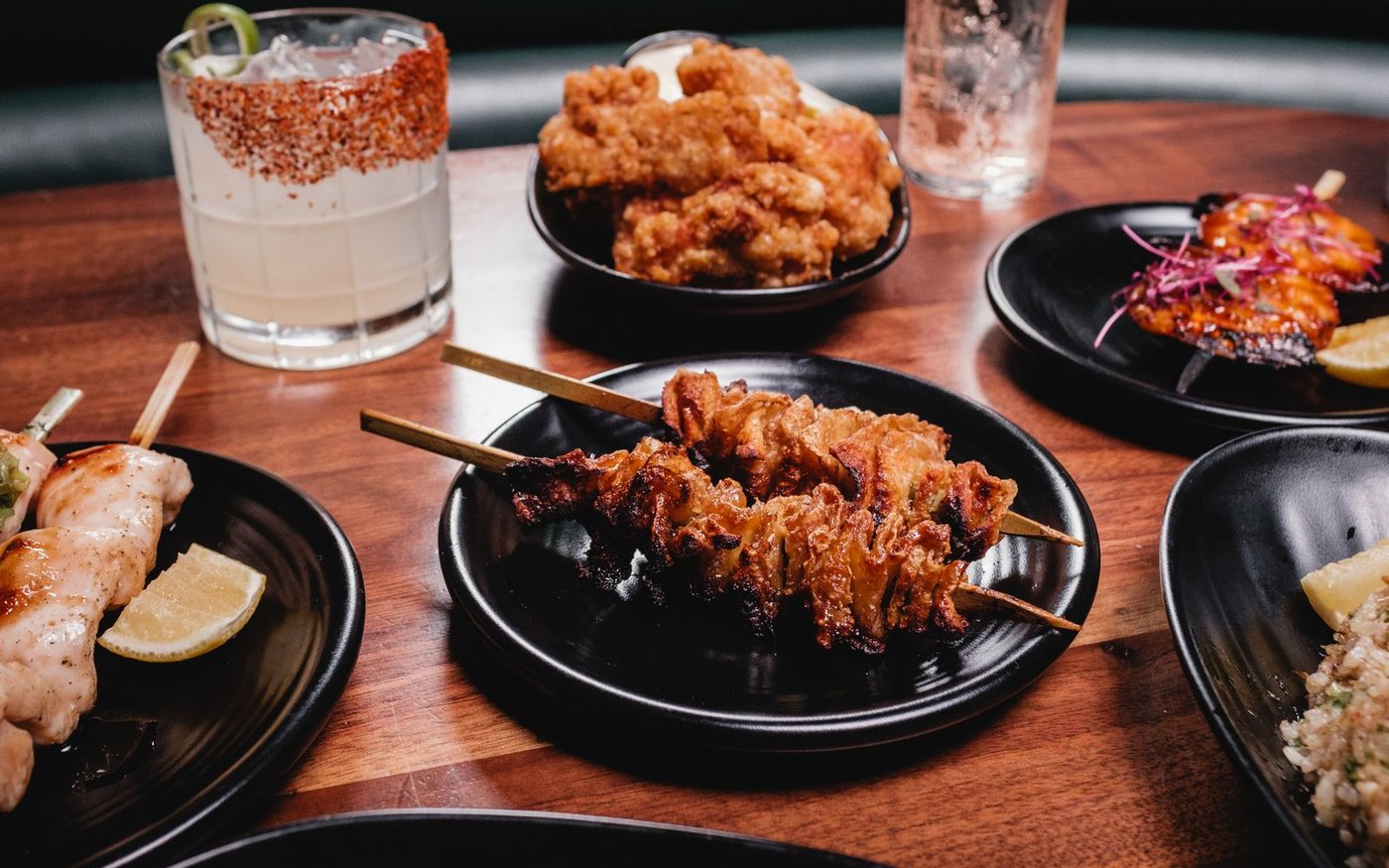
Source: Pexels
Torikizoku is Japan's flat-price yakitori chain: one number for the entire menu, no table charge, no seat charge and no late-night surcharge, which means the bill is just the count of what you ordered. That number moved from ¥390 to ¥410 on 1 October 2026. Here is what a night there costs, how the ordering works, and the rules that decide whether you get in.
1What the chain is
Torikizoku opened its first restaurant in Osaka in 1985 and switched to one flat price for the whole menu the year after. That price then stayed still for 28 years. It has moved in five consecutive years since 2022: ¥390 from May 2025, ¥410 from 1 October 2026, tax included. The chain is run by Eternal Hospitality Japan under Eternal Hospitality Group, listed on the Tokyo Stock Exchange (code 3193), and at the end of August 2026 the group counted 696 Torikizoku restaurants in Japan — 424 company-run and 272 partner-run — inside 1,165 domestic restaurants that also include the Yakitori Daikichi chain.
The flat price is only half of the arithmetic. The chain publishes no otoshi charge (the small appetiser some izakaya bill per person), no seat charge and no late-night surcharge, so a table that orders ten items pays ten times ¥410. That is the entire bill, and it is why this chain is a reasonable first izakaya for someone who would rather not argue with a Japanese receipt at midnight. It is also why the all-you-can-eat plan in section 5 is priced where it is.
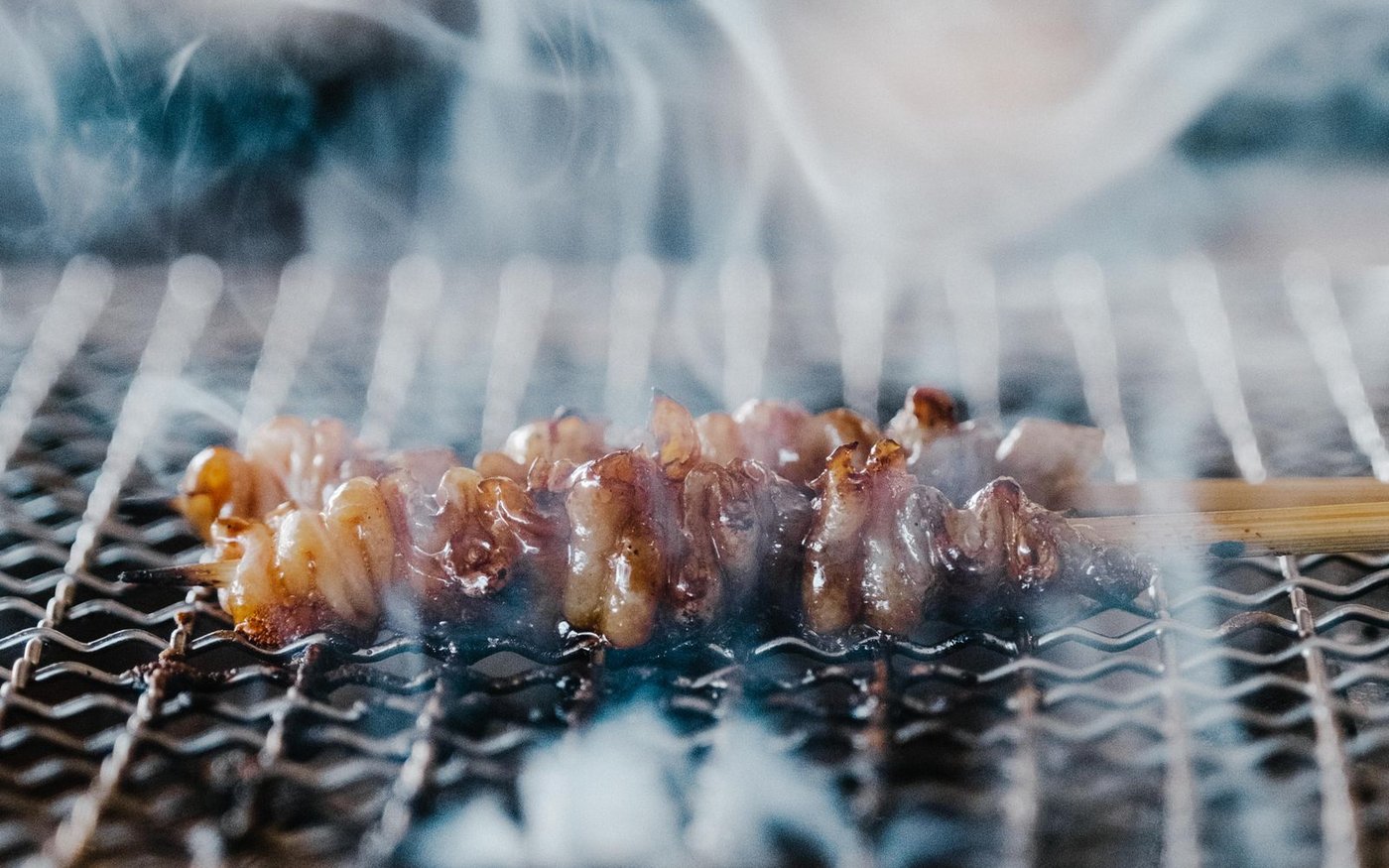
Source: Pexels
2What ¥410 buys
The order unit is two skewers. Yakitori is ordered a skewer-pair at a time, so the signature Kizokuyaki — thigh or breast threaded with leek, in sauce, salt or spice — is ¥410 for two, about ¥205 a skewer. The printed exceptions are the stuffed green pepper and the wings, which come as one. Drinks cost the same as food, and that includes the Mega sizes: a Mega highball and a Mega lemon sour are ¥410, exactly what a pair of chicken skewers costs. Non-drinkers get an ALL-FREE line at 0.00% alcohol labelled with no calories, no sugar and no purine; soft drinks arrive in plastic bottles with a glass of ice, and the bottles are not meant to leave the shop.
Rice is priced by size rather than by dish. Kamameshi — chicken rice cooked in a pot at the table — comes in 270 g, 220 g and 170 g, and the rice sets in 300 g, 250 g and 200 g. There is a children's plate of fried chicken, sausage, fries and rice for the table's smallest diner.
| What a table of two costs | Orders | Yen |
|---|---|---|
| Yakitori, two skewers an order | 4 | 1,640 |
| Cabbage, refills free | 1 | 410 |
| Chicken kamameshi, shared | 1 | 410 |
| Highball or lemon sour | 4 | 1,640 |
| Total | 10 | 4,100 |
Ten orders, ten times ¥410: eight skewers, a plate of cabbage, a pot of rice and four drinks for two people. Remember that number — it is the same ¥4,100 that one person pays for two hours of unlimited food and drink on the party plan in section 5.
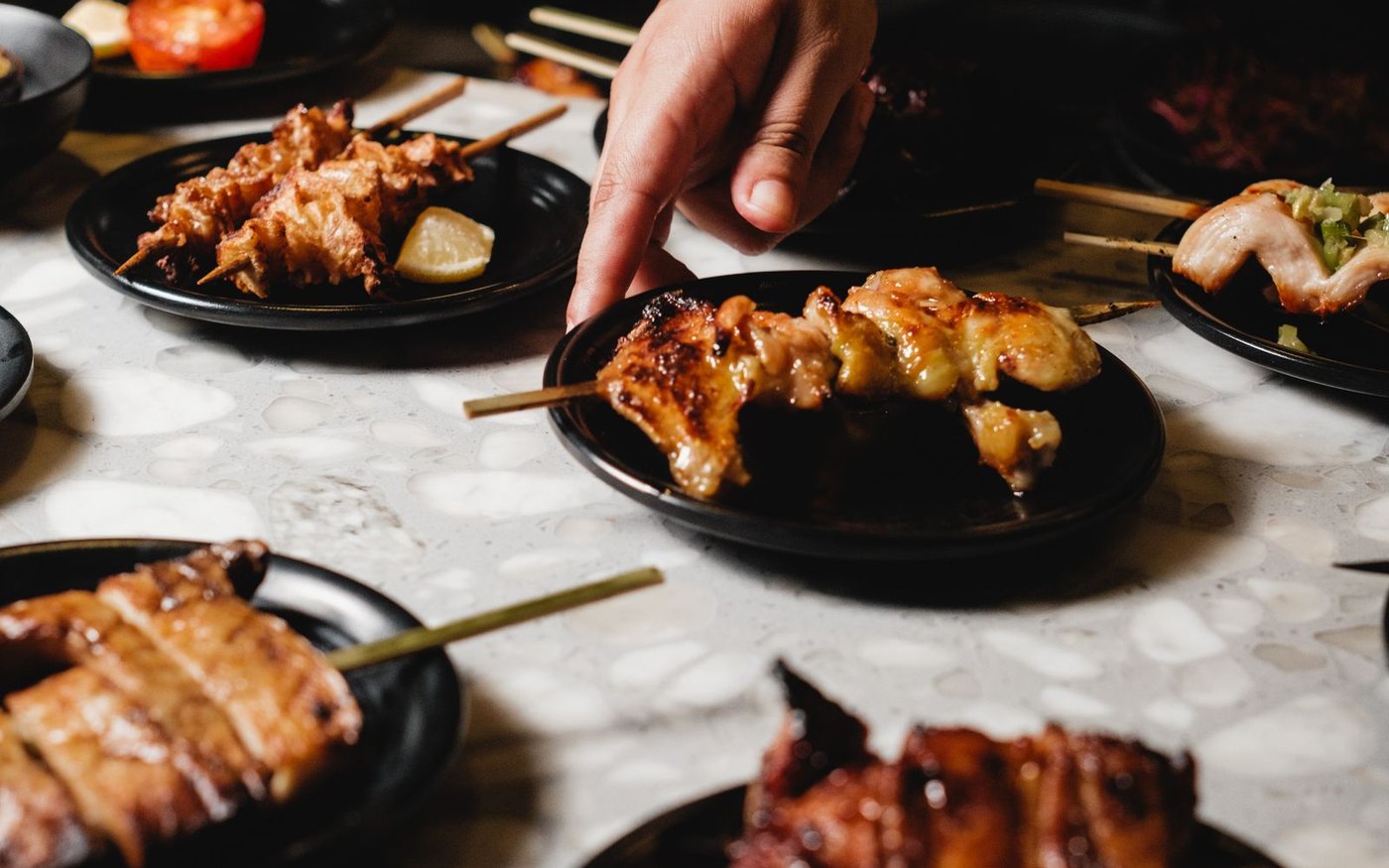
Source: Pexels
3How a night works
- Sit down and switch the tablet to English. Every table has a touch-panel ordering tablet, and the language button offers English, Korean, Traditional Chinese and Japanese. The paper menu has the same four languages.
- Order drinks and food in the same pass. Nothing on the menu costs more than anything else, so there is no reason to hold back the expensive half of the order until later.
- Count orders, not skewers. Skewers arrive two to an order; the exceptions are printed on the menu.
- Take the cabbage first. It is on the menu for the same ¥410 and it refills for free while the grill does its work.
- Order the kamameshi in the first minute. The chain's own guidance is that the pot takes about 30 minutes, which is why regulars order it before anything else arrives.
- Pay at the counter on the way out. The bill sits in a binder on the table; the chain asks you to bring that binder to the checkout rather than pay at the table.
Outside food and drink stay outside, and the tablet is the only way to order — there is no queue at the till until the end.
4What to order
The English menu runs to roughly forty items and the names are literal, which is the whole advantage of a chain of this size: nothing has to be guessed at or pointed at.
- Kizokuyaki — thigh or breast with leek, in sauce, salt or the house spice. Two skewers, ¥410, the order the chain is built on.
- Salt skewers — skin, gizzard, neck, tail, chicken meatball, wings, yagen cartilage, heart, boneless drum, and tenderloin with grated wasabi.
- Sauce skewers — heart, liver, skin, thigh, drum, wings, meatball, and the meatball wrapped in melted cheese.
- Specialties — kara-age fried chicken, chicken tempura with plum sauce, fried knee cartilage, a Camembert croquette, fluffy grated yam on a hotplate, Hokkaido potato salad.
- Rice and noodles — chicken kamameshi, chicken paitan ramen, salt ramen with egg, chicken rice bowl in salt or sauce, chicken cutlet bowl, chicken rice porridge.
- Dessert — chocolate parfait with churros, mochi ice cream with strawberry syrup, frozen catalana.
- Drinks — about fifty, from the Mega highball and Mega lemon sour through Japanese gin, shochu, plum liqueur and sake to the chain's own red and white house wines (TORIKI RED and TORIKI WHITE).
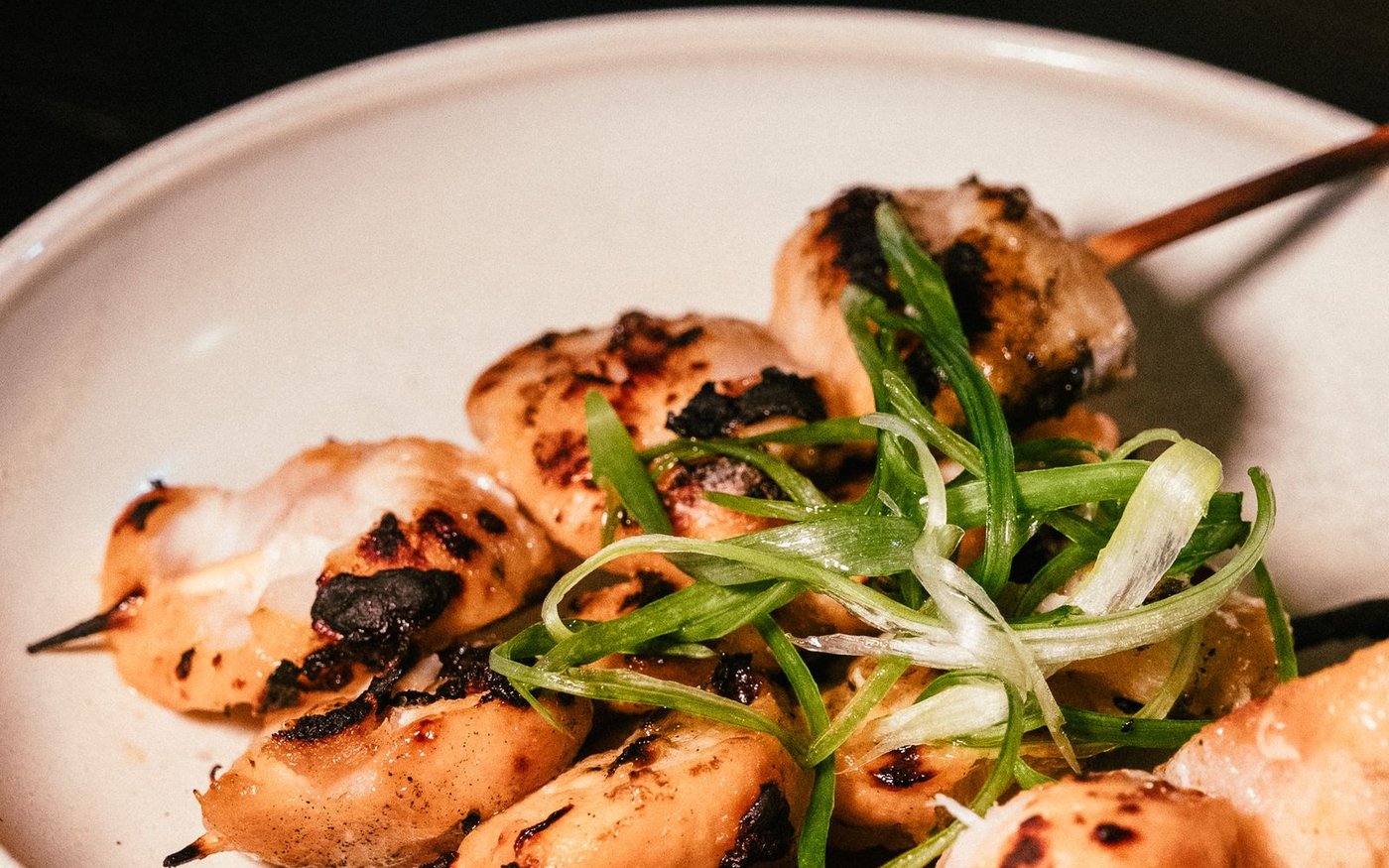
Source: Pexels
Two things decide whether the table is happy with the food. The lean end of the menu is the tenderloin, the breast, the gizzard, the neck and the cartilage skewers; the fat end is skin, tail, heart, liver and anything breaded or fried. The chain publishes calories, allergens and country of origin per item in an official English PDF, updated in October 2026, which is worth a look before ordering if you are counting anything.
5The all-you-can-eat plan
Toriki Bansankai is the chain's flat-price party plan: ¥4,100 a person, tax included, for two hours of unlimited food and drink — raised from ¥3,900 on 1 October 2026 along with the rest of the menu. It is not a walk-in option, and its terms are tighter than the menu's.
| Toriki Bansankai | The term, as published |
|---|---|
| Who can book | Groups of four or more adults (junior high school age and over). Three adults and one primary-school child is refused. |
| How to book | By phone to the branch, at the latest the day before. There is no website or app route for this plan. |
| Time | Two hours from the start, settled at the end. |
| How it starts | The shop chooses the opening plates; everything after that you order freely. |
| Last order | 20 minutes before the end — the kamameshi 60 minutes before. |
| Leftovers | No taking food home from this plan, and food left over from an extra order is charged. |
| Cancellation | Same-day cancellation costs half the party price. Arriving 15 minutes late without calling counts as a cancellation. |
| Under 20 | A group made up entirely of under-20s cannot book it, or enter. |
Children are priced separately — the chain's FAQ lists a reduced rate for primary-school children and free entry for pre-schoolers, but those figures were written for the previous ¥3,900 plan and have not been reissued, so ask the branch when you call.
Compare it with the sample bill in section 2 before committing: ¥4,100 is ten orders, and ten orders is a solid two-person dinner. The plan is for a table that intends to keep ordering drinks, not for two people who want one round of skewers.
6Booking a table
Three official routes, all of which end in the same email: the store locator on the chain's Japanese site (each branch page carries the booking button), the chain's own app, or a phone call to the branch. What the booking changes is the clock, not the menu.
- A booked table runs two hours from the reservation time, plan or no plan.
- The confirmation arrives by email from the @ebica.jp domain. Check the spam folder before concluding the booking failed.
- Cancelling goes through that email's link. The app cannot cancel a booking; if the email is gone, it is a call to the branch.
- Opening-sale branches take no reservations at all. Half-price and ¥99 drink promotions run without bookings, so a new branch in its opening weeks is walk-in only.
7Where the branches are
With 696 restaurants in the country, the choice that matters is which one, and the branches differ more than a chain usually does: hours, seat counts and smoking arrangements are all per branch. These six are the ones to aim for in Tokyo, Osaka, Kyoto and Naha, taken from the chain's own branch pages.
| Branch | Address | Hours | Seats |
|---|---|---|---|
| Tokyo · Shinjuku East exit | Shinjuku 3-34-11, Peace Building 8F, Shinjuku-ku | Mon–Fri 14:00–4:00, Sat–Sun 12:00–4:00 | 66 (4 counter) |
| Tokyo · Asakusa | Asakusa 1-1-17, 3F, Taito-ku | Mon–Thu 15:00–23:00, Fri–Sat 15:00–4:30, Sun 15:00–23:00 | 89 (8 counter) |
| Osaka · Shinsaibashi | Shinsaibashisuji 1-4-29, Coco Terrace Shinsaibashi 4F | 17:00–2:00 daily | 103 (3 counter) |
| Osaka · Hankyu Higashi-dori 3, Umeda | Komatsubara-cho 1-10, Umeda Pal Building 4F | Mon–Fri 17:00–1:00, Sat–Sun 14:00–1:00 | 132 (6 counter) |
| Kyoto · Kiyamachi-dori | Zaimoku-cho 189, Nakagyo-ku, 1F | 17:00–5:00 daily | — |
| Okinawa · Naha Miebashi | Makishi 2-18-4, Palette Makishi Building 1F, Naha | 17:00–1:00 daily | 89 (6 counter) |
Four of those six open in the early afternoon and run past midnight, which makes the chain a lunch or a late dinner rather than only an after-work stop. None of the branches has a private room — the chain's own FAQ is blunt that tables are separated by partitions and nothing else — and the city branches publish an indoor smoking booth as a facility, so smoke sits in a booth rather than across the room. Naha alone has three branches, all opening at 17:00, so Okinawa needs no detour. Takeaway skewers exist at some branches and have to be ordered the day before.
8The rules at the door
- Age. Twenty is the drinking age, and it is also the door rule: a group made up entirely of under-20s is refused entry. With a parent or anyone 20 or over present, under-20s are admitted on condition that no alcohol is served to them. Staff may check ID for anyone who looks close to 20.
- Payment differs by branch. The branch pages list cash, the four main cards, and PayPay, Rakuten Pay, au PAY, Merpay, d Barai and Alipay where they are accepted — the chain's FAQ confirms card acceptance varies, so read the branch page before you assume your card works.
- No outside food or drink, and no litter on the floor.
- Leftovers can go home from a normal order, in free or paid containers. Not from the all-you-can-eat plan.
- Two hours is the limit on a booked table, and the plan's own limit is the same two hours.
9What I would do
- Take a table at 17:00, or after 21:00. The branches above open between 14:00 and 17:00 and close between 1:00 and 5:00, so both ends of the evening sit outside the after-work hour that fills them.
- Order the cabbage and the kamameshi in the first minute. One fills the table while the skewers cook, the other takes half an hour and will otherwise arrive when you have stopped being hungry.
- Count orders, not skewers. Four orders of yakitori is eight skewers and ¥1,640, which is more chicken than two people usually finish.
- Take the Mega. A Mega highball is the same ¥410 as a standard one, so the larger glass is the better-value drink and the shorter bill.
- Bring the binder to the counter. Nothing is added at the till: no service charge, no seat charge, no late-night rate.
- Price the party plan against your appetite. Ten orders is ¥4,100 for two; the plan is ¥4,100 for one. It wins on a table that drinks.
| Before a Torikizoku night | Why it matters here | Check tickets |
|---|---|---|
| Japan eSIM | The branch map, the booking page and the confirmation email all live on a phone | Airalo eSIMania |
| Tokyo hotels | The Shinjuku and Asakusa branches are both a walk from the main hotel districts | Klook KKday |
| Osaka hotels | Shinsaibashi and Umeda sit between Dotonbori and the stations | Klook KKday |
Keep reading
Sources
- Torikizoku — notice of price revision, 10 September 2026: food and drink ¥390 → ¥410, Toriki Bansankai ¥3,900 → ¥4,100, both from 1 October 2026
- Torikizoku — menu, autumn/winter 2026, English edition: item names, two skewers an order, rice sizes, leftovers, allergen and nutrition PDF
- Torikizoku — How to order: the ordering tablet and its four languages, the free cabbage refills, the counter where you pay
- Torikizoku — frequently asked questions: the age rule, reservations and the two-hour limit, card acceptance, no private rooms, children's pricing on the party plan
- Torikizoku — branch pages for Shinjuku East exit, Asakusa, Shinsaibashi, Hankyu Higashi-dori 3, Kiyamachi-dori and Naha Miebashi: addresses, hours, seat counts, payment methods
- Torikizoku — the chain's own account of its pricing: no ootoshi charge, no seat charge, no late-night surcharge
- Eternal Hospitality Group — monthly store report, August 2026: 696 Torikizoku restaurants in Japan, 1,199 across the group
- Asahi Shimbun — the chain's price history and the 1 October 2026 revision (10 September 2026)