Source: Pexels · free to use, no credit required
Dotonbori is not a restaurant and it has no best dish. It is one street beside the canal, a few hundred metres of signs, and four Osaka foods worth standing in line for — takoyaki, okonomiyaki, kushikatsu and crab. What decides whether your evening is good is not which shop you pick. It is the house rules: no dipping twice, one drink each, last orders before 22:00, and the two times of day — 11:30 and after 20:30 — when the queues are half what they are at seven.
1Where it is, and the three exits you need
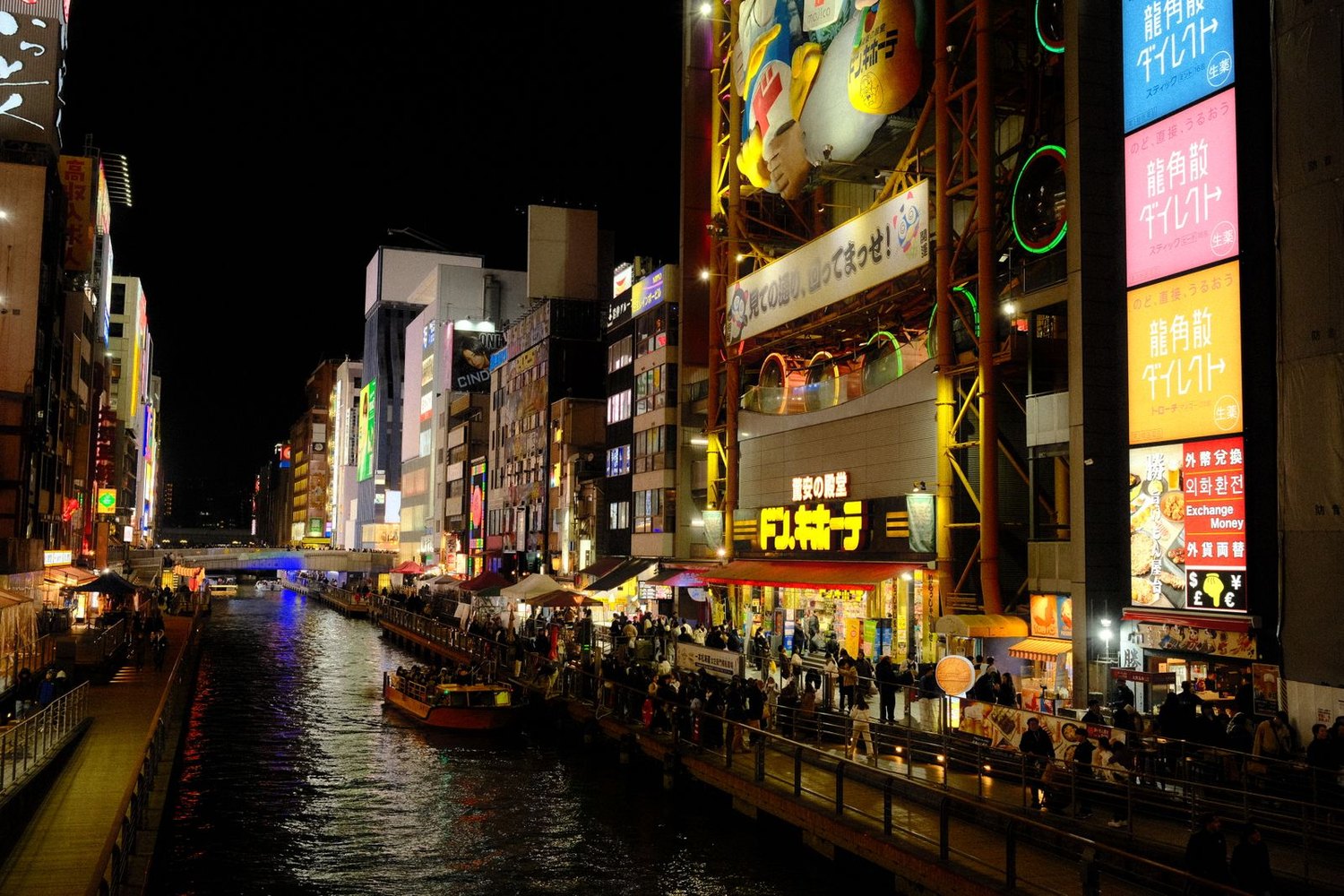
Dotonbori runs east–west beside the Dotonbori canal, between Namba and Nipponbashi. The centre of gravity is Ebisubashi, the bridge everyone photographs, and the restaurant strip is the pavement on the south bank. There is no entrance, no ticket, and no closing time for the street itself — the shops close, one by one, between 21:00 and 23:00.
You arrive at Namba. Osaka Metro (Midosuji, Yotsubashi and Sennichimae lines), Nankai from Kansai Airport and Kintetsu all stop there, and the exits are not interchangeable:
- Exit 14 — five minutes to the river walk, arriving at the north bank near the Don Quijote store. This is the exit to take if you want the postcard view first and the food second.
- Exit B22 — two minutes to Honke Otako's takoyaki counter and the west end of the strip. This is the exit to take if you are hungry.
- Nipponbashi exit 2 (Sakaisuji line) — five minutes, and it drops you at the east end of the strip.
From Shinsaibashi you walk down the covered Ebisubashi-suji arcade instead — about 11 minutes to Hozenji Yokocho, with the cheesecake shop and the steamed-bun counter on the way. Whichever way you come in, walk the strip once without buying anything. It takes about 15 minutes and it costs nothing, and afterwards you will know which queues you are willing to join.
Source: Pexels · free to use, no credit required
2The food, with the prices on the door
Every price below is what the shop itself posts, tax included, checked in October 2026. Counter prices here move more often than restaurant ones, because there is always a queue ready to pay whatever the board says.
| What to order | Where | Price | Hours |
|---|---|---|---|
| Takoyaki, 6 pieces | Honke Otako (本家大たこ), Dotonbori 1-4-16 | ¥600 (ten for ¥1,000) | 10:00–23:00, no closing day |
| Okonomiyaki, yamaimo batter | Okonomiyaki Mizuno (美津の), 1-4-15 | Mizuno-yaki ¥1,430; about ¥1,500–2,000 a head | 11:00–22:00, closed Thursday |
| Okonomiyaki, six floors, no booking | Chibo Dotonbori (千房), 1-5-5 | Dotonbori-yaki about ¥1,850 | 11:00–23:00, last order 22:00 |
| Kushikatsu | Daruma Dotonbori (元祖串かつ だるま), 1-6-8 | ¥1,500–2,500 a head; one drink each | 11:00–22:30 (10:30 at weekends) |
| Crab, sit-down | Kani Doraku, main shop (かに道楽), 1-6-18 | Lunch sets from about ¥3,500; dinner ¥5,000–10,000 | 11:00–22:00, closed 31 December |
| Kitsune udon | Dotonbori Imai (今井), 1-7-22 | ¥1,000–2,000 a head | 11:30–21:30, closed Wednesday |
| Oden | Takoume (たこ梅), 1-1-8 | about ¥6,000 a head with sake | 16:00–22:30, open all year |
| Zenzai, two bowls a portion | Meoto Zenzai (夫婦善哉), Namba 1-2-10 | ¥800–920 | 10:00–22:00, no closing day |
| Ramen, 24 hours | Ichiran (一蘭), Souemoncho 7-18 | ¥1,180 a bowl (extra noodles ¥210) | 24 hours, surcharge 22:00–06:00 |
| Steamed pork buns | 551 Horai, main shop (551蓬莱), Namba 3-6-3 | ¥500 for two, ¥1,000 for four | 10:00–21:30, closed 1st & 3rd Tuesday |
| Cheesecake, whole 18 cm | Rikuro's, Namba shop (りくろーおじさん), Namba 3-2-28 | ¥1,095 | 9:00–20:00, café to 17:30 |
| All-you-can-eat beef | Aburiya (あぶりや), Nishi-Shinsaibashi 2-5-9 | about ¥6,000 a head, by the clock | 16:00–23:00, weekend lunch from 12:00 |
The takoyaki stand: Honke Otako
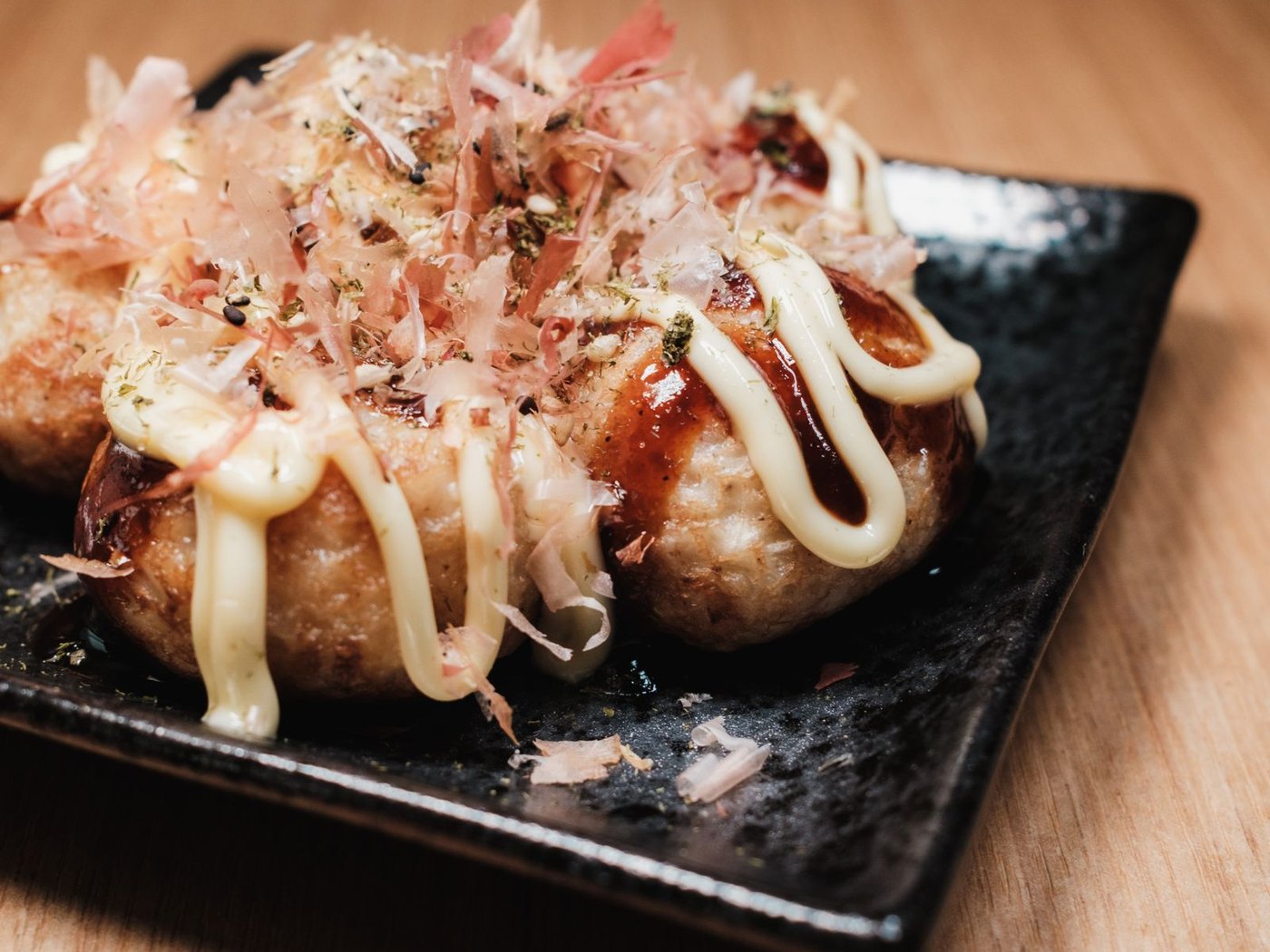
The oldest takoyaki counter in Dotonbori, opened in 1972 and still run as a stand, with a small eat-in room behind it for when it rains. The octopus is cut large enough that you can see it, the batter stays liquid in the middle, and it was on the Michelin Bib Gourmand list for Kyoto and Osaka in 2016. Six for ¥600, ten for ¥1,000, twenty for ¥2,000. Cards no, PayPay yes.
Eat them within a minute of getting them, standing up, and expect to burn the roof of your mouth at least once — a takoyaki is molten in the middle and the sauce hides it. The other famous name, Kukuru, is 200 m east at Dotonbori 1-10-5 and opens earlier, at 10:30; its Dotonbori shop takes both a takeaway queue and a separate dine-in queue, and its dine-in-only “surprise” takoyaki, with the octopus hanging out of each ball, sells out before mid-afternoon.
Source: Pexels · free to use, no credit required
The okonomiyaki: Mizuno, and Chibo when the line is long
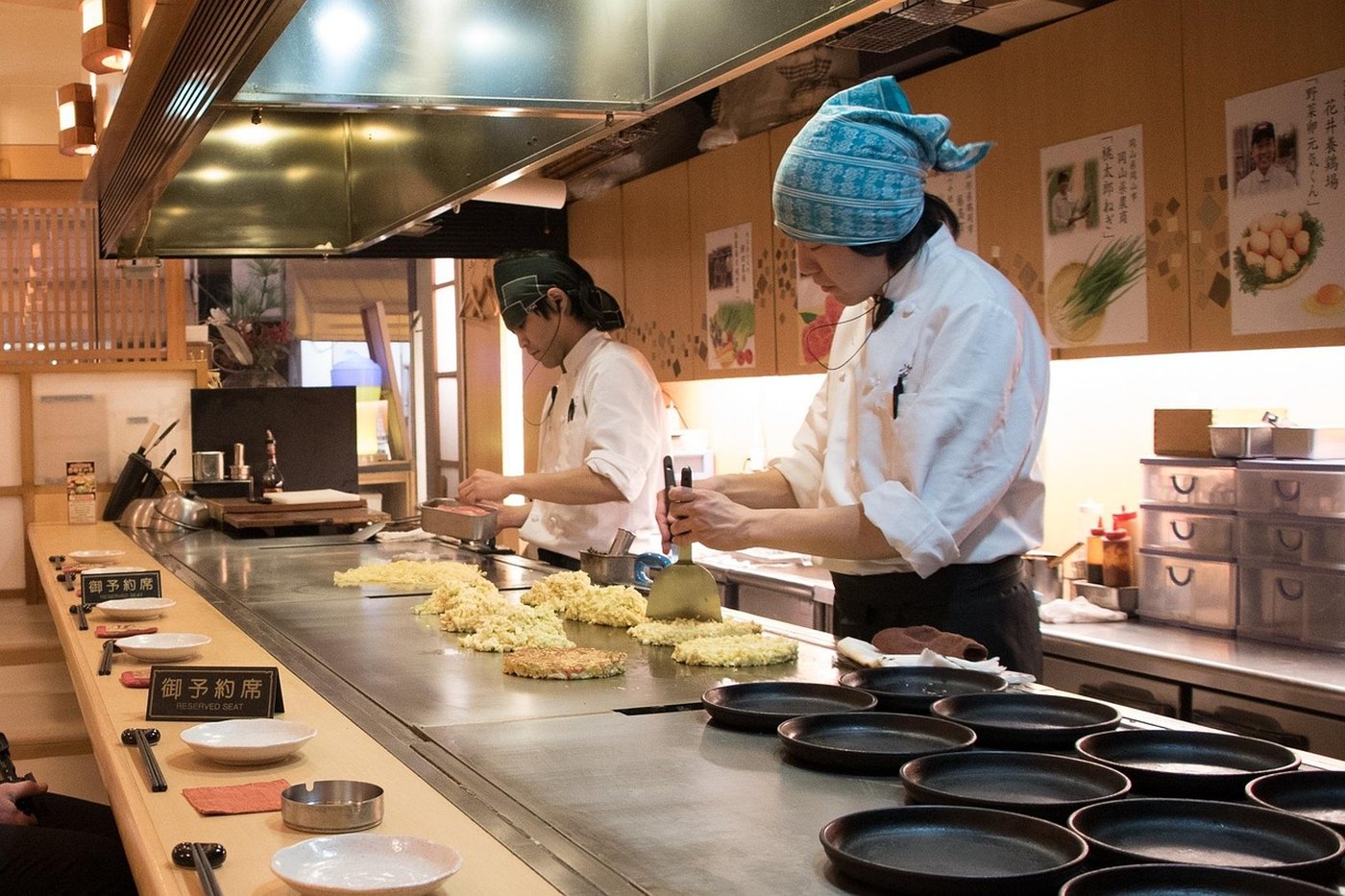
Mizuno has been on Dotonbori 1-4-15 since 1945 and holds a Bib Gourmand, which is rare for an okonomiyaki counter. Order the yamaimo-yaki: no flour at all, 100% grated yam, which comes out closer to a soufflé than to a pancake. The house mix, Mizuno-yaki, is ¥1,430. The staff cook it at your table and hand it over finished, so you cannot ruin it. It closes on Thursdays, the one closure in this guide worth remembering.
Chibo at 1-5-5 is the opposite approach: six floors, about 190 seats, the house dish at roughly ¥1,850, open until 23:00 and simply does not take reservations — not by phone, not online. It is the fallback when Mizuno's queue is around the block, and its seventh floor is a halal and vegetarian kitchen, which is the only one on this street.
Source: Pixabay · free to use, no credit required
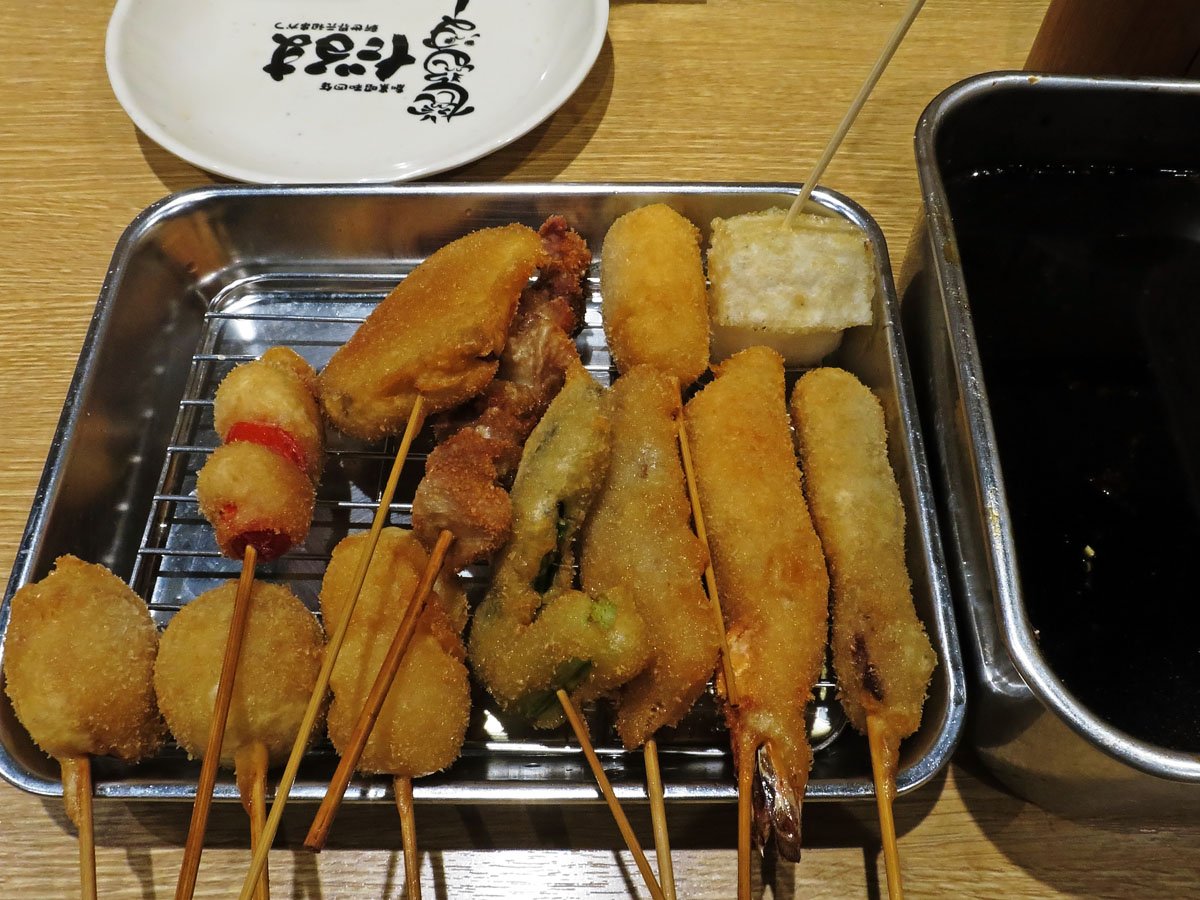
The kushikatsu: Daruma, and the sauce rule
Daruma has been frying skewers since 1929 and its Dotonbori branch at 1-6-8 seats 140 people, which is why the queue moves. Budget ¥1,500–2,500 a head. Two house rules: one drink per person is compulsory (primary school children excepted), and the tray of sauce on the counter is shared by everyone in the shop — dipping a skewer twice is the one thing that will get you told off in public. Spoon the sauce over the skewer instead. Cabbage is the free, unlimited thing you dip, and it exists precisely so you do not double-dip the rest.
Source: Wikimedia Commons · Aiko99ann, CC BY-SA 3.0

The crab, if you are spending
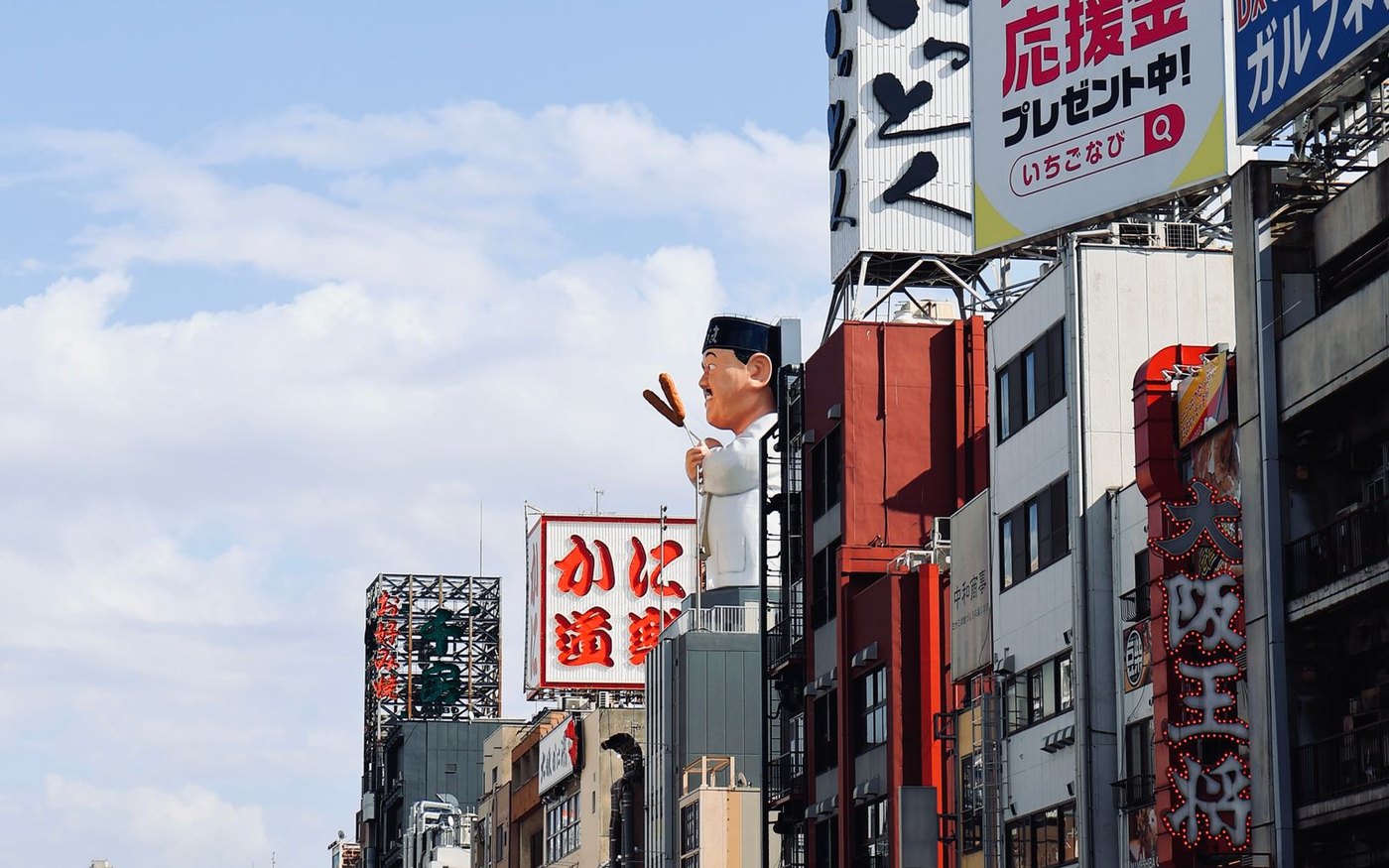
Kani Doraku opened on this street in 1962, and the moving crab above the door — the third version, installed in 1996, about 8 m across and 3.6 m high — is the reason half the photographs on this street exist. The main shop is at 1-6-18: lunch sets from about ¥3,500, dinner ¥5,000–10,000, last entry 20:30. If you only want the taste of it, the shopfront counters sell grilled crab legs by the piece, which costs far less than a table; if you want the meal, book, because there is no walk-in table at 19:00. Kani Doraku runs more than one branch on this street, and the one with the queue is always the original.
The three older things: udon, oden, zenzai
Under the neon there is a street that has been feeding Osaka since the nineteenth century, and these three are worth building an evening around when you have had enough fried food.
- Imai (1-7-22, 1946) makes the kitsune udon the city is judged on — sweet fried tofu over a kombu dashi the shop has been making the same way since 1946. ¥1,000–2,000 a head, closed Wednesdays.
- Takoume (1-1-8, 1844) is the oldest oden shop in Japan and is now on its fifth generation. It opens at 16:00, it is small, and with sake you will spend about ¥6,000. This is the quietest good meal on the street.
- Meoto Zenzai (Namba 1-2-10, 1883) serves one portion of zenzai in two bowls — that is the whole idea, and the shop took its name from a 1940 novel set in the alley behind it. ¥800–920, open 10:00 to 22:00. Eat the salt kombu afterwards; that is what it is for.
3The rules that catch first-timers
- The queue is the price you pay. At 19:00 on a Saturday the takoyaki counters run 30–40 people deep for six balls. The same counter at 11:30 or at 20:45 is five people. Numbered queues at two counter windows (takeaway and eat-in) are separate — join the wrong one and you wait twice.
- Last orders are earlier than the closing time. Imai stops taking orders at 21:00, Chibo at 22:00, Daruma 30 minutes before it shuts. Nothing here takes a 21:30 walk-in and cooks you a proper meal.
- One drink each, by the clock, in cash-plus-PayPay. Kushikatsu bars require a drink per person. All-you-can-eat places (Aburiya and its neighbours) sell you a time window, not a meal. Ichiran adds a late-night surcharge between 22:00 and 06:00. And the oldest counters — Otako among them — take PayPay and cash but not cards.
- Never dip twice. The sauce is communal. Say it to whoever you are travelling with before the skewers arrive, not after.
- Read the card before you follow the tout. The people handing out “all you can eat and drink” on the pavement are selling a fixed course with a cover charge and a time limit. Fine if that is what you want — just read the price before you climb the stairs.
- The river cruise sells out and does not take phone bookings. Tickets are same-day only, sold from an hour before the first sailing at the booth beside the Don Quijote river entrance. Go early for a sunset slot or accept a 20:30 one.
4One evening, planned
- 17:30 — arrive at exit 14, walk to Ebisubashi, take the photograph, then turn east along the south bank. Do not eat yet.
- 18:00 — takoyaki at Honke Otako. Six pieces, ¥600, eaten standing on the pavement.
- 18:30 — Hozenji Yokocho, three minutes south, for the temple and the two stone alleys. It is free, it is quiet, and it resets your appetite.
- 19:15 — the sit-down meal. Okonomiyaki at Mizuno if it is not Thursday and the queue is under 30 minutes; otherwise Chibo, six floors, two hundred seats, and it will seat you.
- 20:45 — zenzai at Meoto Zenzai, two bowls, or the cheesecake at Rikuro on the arcade walk back if you want to carry it to the hotel.
- 21:30 — decide. The Ebisu Tower wheel runs to 22:00 (22:30 at weekends); the river cruise takes its last passengers at 21:00.
What that costs, per person: about ¥1,700 if you graze — takoyaki at ¥600, one cheesecake between two, a coffee — about ¥3,500 with an okonomiyaki dinner and a drink, and ¥8,000–12,000 if the evening turns into crab.
5The half of Dotonbori that is not food
Source: Pexels · free to use, no credit required
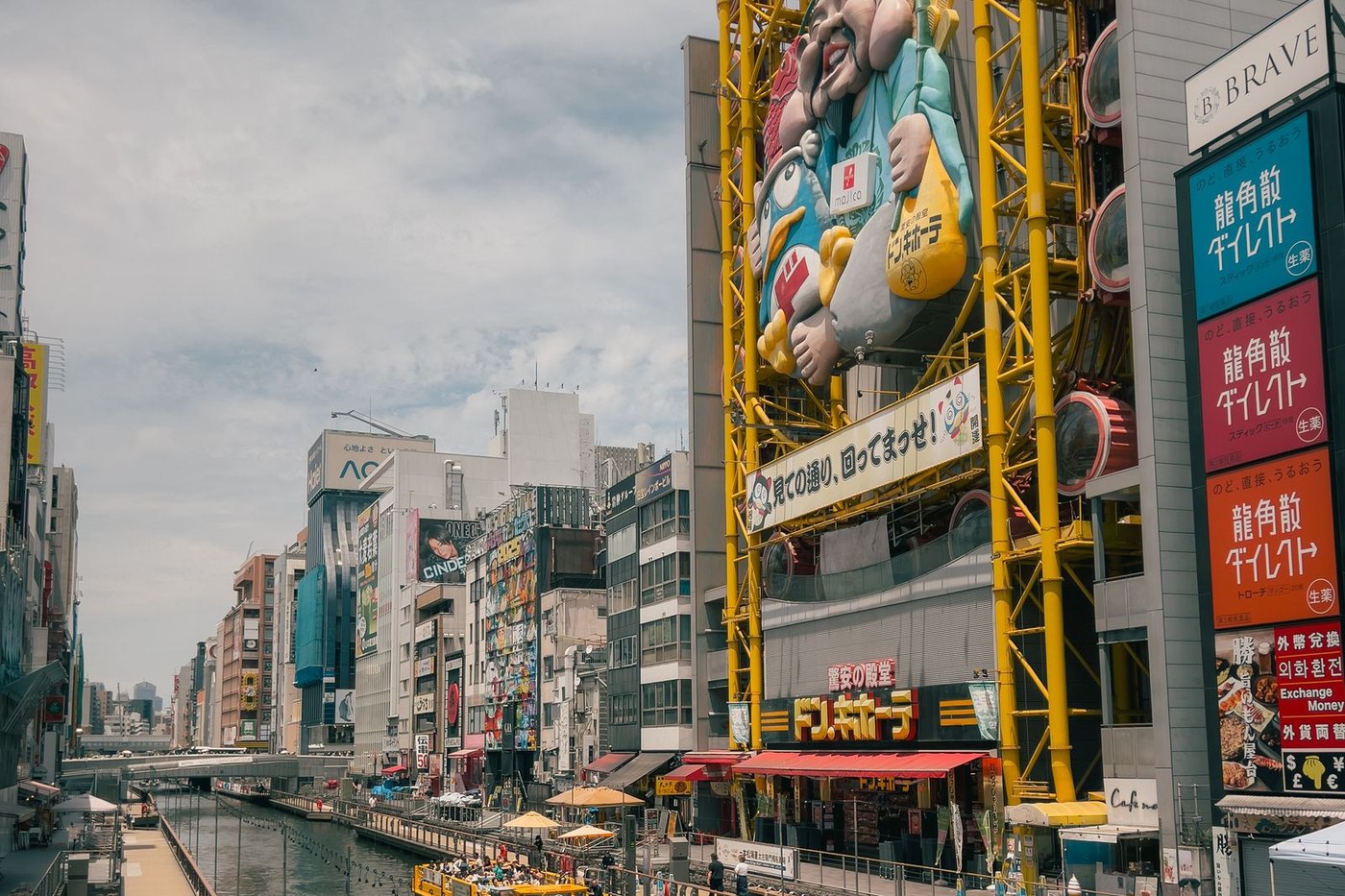
- Glico sign. 20.00 m by 10.38 m, 143,976 LEDs, in place since 23 October 2014 — the sixth version since the first neon tower went up in 1935 at Dotonbori 1-10-4. It lights from sunset until midnight. The cleanest shot is from the canal walkway level with the sign, not from Ebisubashi itself.
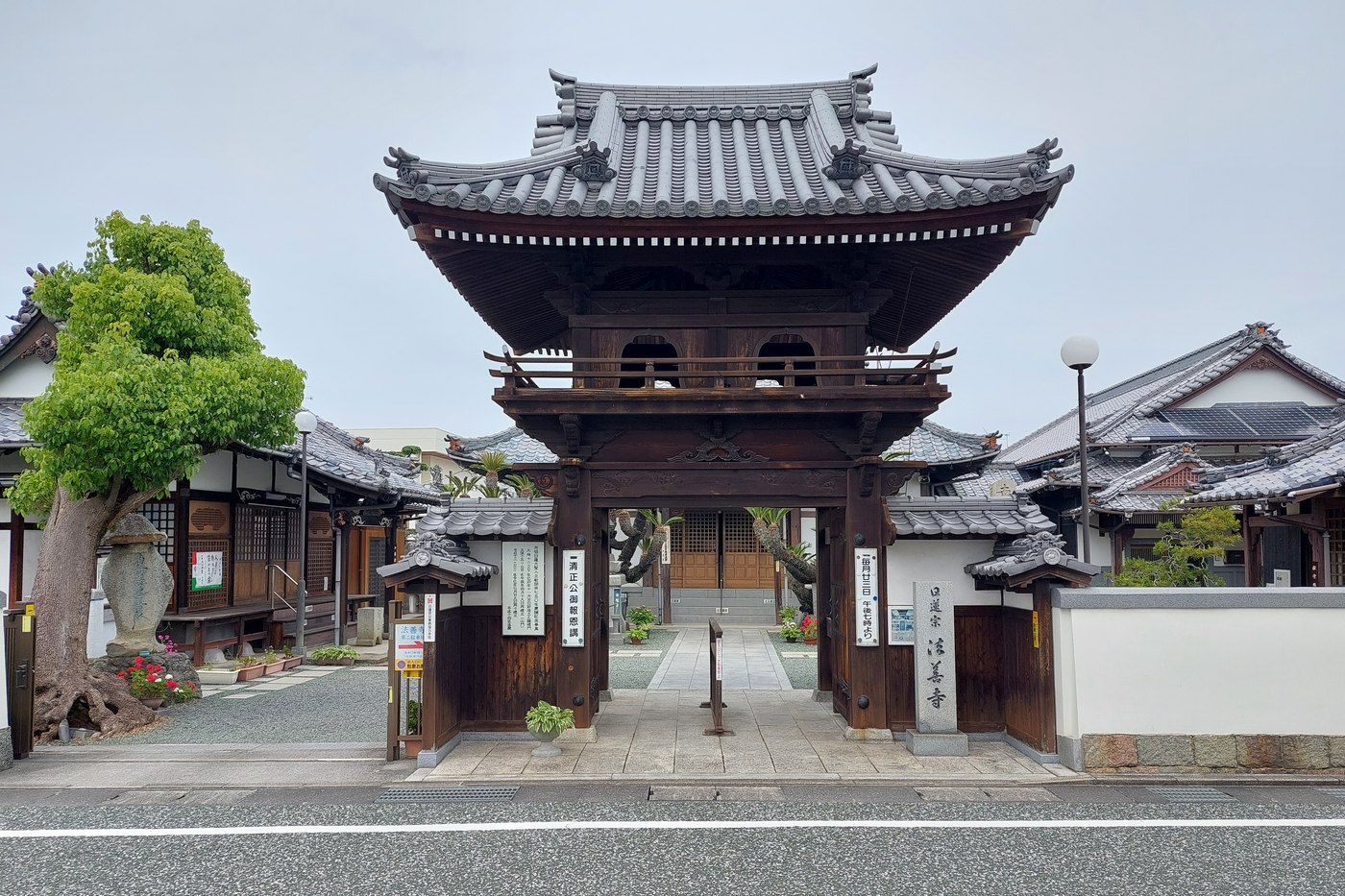
- Hozenji. Founded in 1637; everything but the Fudo statue burned in the 1945 air raids. The statue is covered in moss because visitors keep pouring water over it — that is the ritual, and the ladle is there for it. Free, statue accessible at any hour, temple office 08:00–23:00.
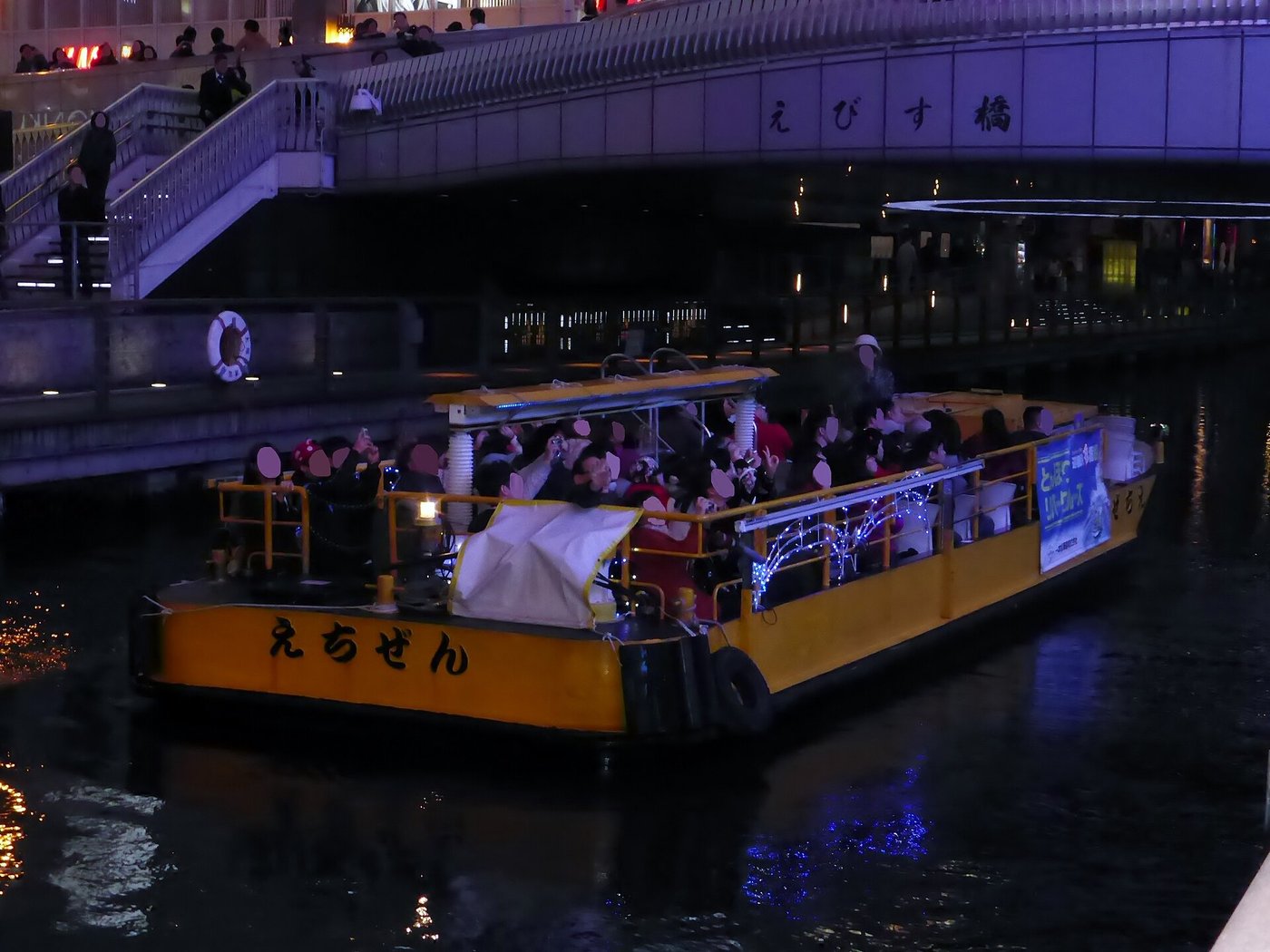
- Tombori River Cruise. 20 minutes on the canal, from the Taizaemonbashi pier beside the Don Quijote river entrance. Sailings at :00 and :30 from 11:00 to 21:00. Adult ¥2,000, students ¥1,000, primary school ¥500, one under-six free per adult. It is free with the Osaka Amazing Pass (¥3,500 for one day, ¥5,000 for two, valid to 31 March 2027). Boats are open; in rain they hand out ponchos and will not let you use an umbrella. It does not sail on 13, 24 and 25 July 2026.
- Ebisu Tower. The yellow oval wheel on the side of Don Quijote at Souemoncho 7-13 — 77.4 m up, 32 gondolas, 15 minutes a ride, ¥1,000 a person (¥100 off with the pass). Mon–Fri 11:00–22:00, weekends to 22:30; on Tuesdays it starts at 13:00 for maintenance. It is the world's first oval wheel and its gondolas rotate as they go — the view is the point, not the ride.
- Don Quijote, 24 hours. Six floors, tax-free counter, and the only shop on this street you can walk into at 03:00. The general tax-free rules change on 1 November 2026 — that is a separate guide.
Source: Wikimedia Commons · Tokumeigakarinoaoshima, CC0

Source: Wikimedia Commons · CC0, no credit required
.jpg)
Keep reading
- Narita vs Haneda vs Kansai: which airport lands you closest to your hotel — Kansai to Namba in 34 minutes on the Rapi:t, then this street.
- Suica, PASMO or ICOCA: which IC card to actually buy in 2026 — what gets you to Namba, and what only pays the base fare.
- Japan's tax-free shopping changes on 1 November 2026 — the Don Quijote counter at the end of this street.
- All guides to Japan — the full index.
Sources
- Honke Otako (本家大たこ) and the Dotonbori Shopping Street Association — counter hours, posted takoyaki prices
- Okonomiyaki Mizuno (美津の) and Chibo (千房) — shop hours, menus and prices, reservation policy for the Dotonbori branch
- Ganso Kushikatsu Daruma (元祖串かつ だるま) — Dotonbori branch hours, seating, one-drink rule and sauce prices
- Kani Doraku (かに道楽) — Dotonbori main shop hours and lunch and dinner price bands
- Dotonbori Imai (今井), Takoume (たこ梅) and Meoto Zenzai (夫婦善哉) — hours, closing days and menu prices
- Ichiran (一蘭) — Dotonbori shop hours, seat count and ramen prices, including the late-night surcharge
- 551 Horai (551蓬莱) — steamed bun prices after the 1 September 2026 revision; Rikuro's (りくろーおじさん) — cheesecake price after the 1 June 2026 revision
- Aburiya (あぶりや) — Dotonbori-Midosuji branch hours and listed average spend
- Ezaki Glico and Osaka City — dimensions, LED count and lighting hours of the Dotonbori Glico sign
- Ipponmatsu Shipping (一本松海運), operator of the Tombori River Cruise — route, timetable, fares and same-day ticket rule
- Don Quijote — Ebisu Tower hours, fares, maintenance days and ride data; Osaka Metro and the Osaka Amazing Pass — pass prices, validity and participating facilities
- Hozenji (法善寺) and Osaka Metro's area guide — temple history, visiting hours and walking times from each station exit