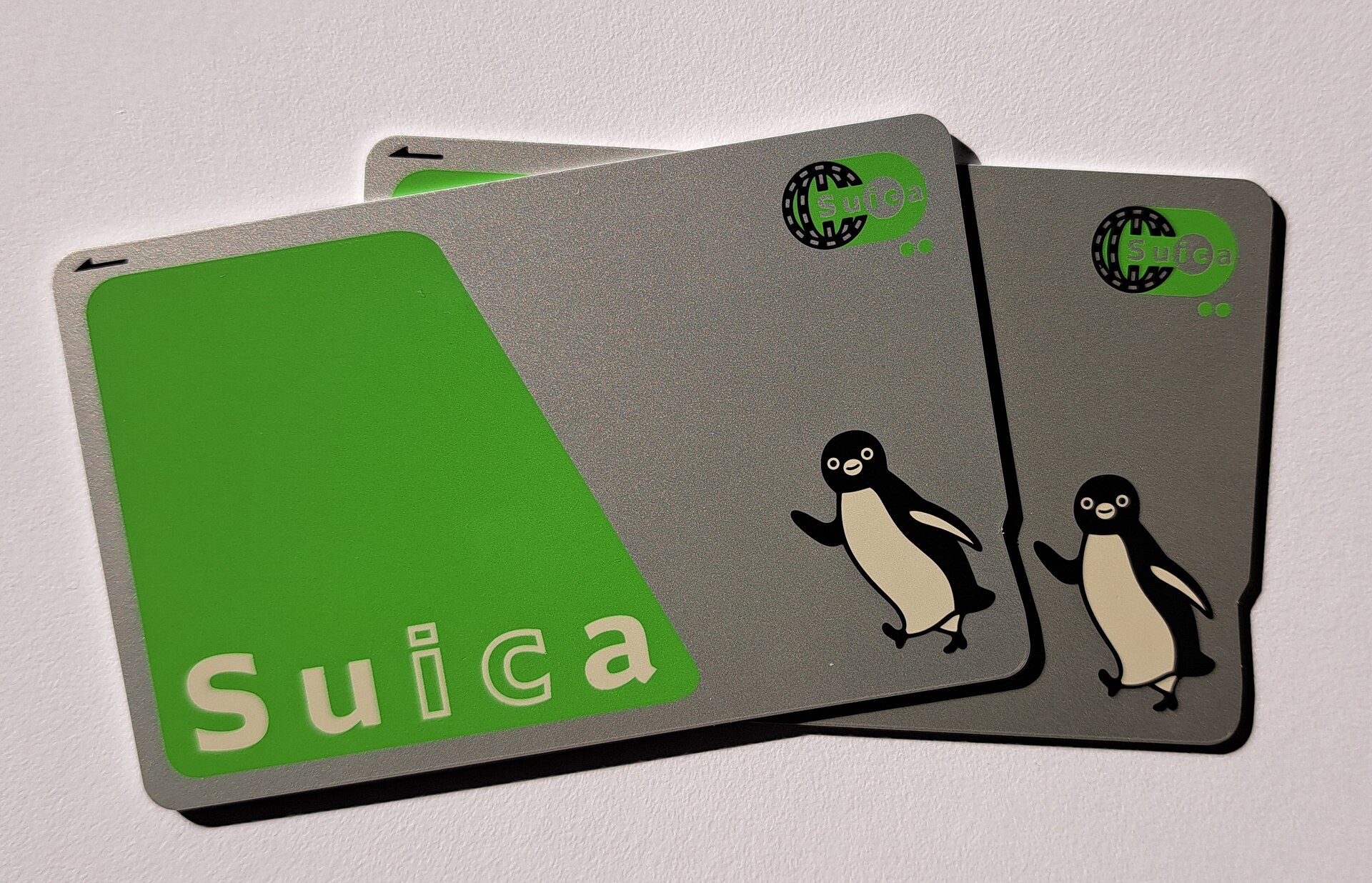
Source: Wikimedia Commons · PanierAvide, CC0

Every IC card in Japan is the same piece of plastic underneath: tap on, tap off, ride, and the machine works out the fare. So “which one?” is really three questions — where can you buy it, will it work on your phone, and where do you get your money back.
1The four things you can actually buy
| Where you get it | Deposit | Runs out? | Getting money back | |
|---|---|---|---|---|
| Welcome Suica (the visitor card) | JR East machines at Narita Airport Station, Narita Terminal 2·3 and Haneda Terminal 3, plus JR EAST Travel Service Centres and the big Tokyo stations | ¥0 | Yes — 28 days from first use | No. The leftover balance is forfeited, and it is not reissued if you lose it. One card per person, cash top-up only. |
| Suica or PASMO (the normal card) | JR East ticket machines and ticket offices for Suica; PASMO comes from Kanto private rail and bus operators | ¥500 | No, as long as you keep using it | Deposit plus balance, but only at the company that issued it. JR East takes a ¥220 handling fee out of the balance. |
| ICOCA (the Kansai card) | JR West ticket machines and ticket offices; ¥2,000 buys the card with ¥500 deposit and ¥1,500 already loaded | ¥500 | No | At JR West only, again minus ¥220. The ICOCA & HARUKA package at Kansai Airport bundles it with the airport train. |
| Welcome Suica Mobile / Suica in Apple Wallet | The App Store, before you land. Welcome Suica Mobile is iOS (and Apple Watch) only | ¥0 | Welcome Suica Mobile: 180 days from issue | No plastic, no deposit, and the unused balance on the app card can be refunded online. |
Two things follow from that table. The visitor cards (Welcome Suica, physical or mobile) are the cheapest way in and the worst way out — no deposit, but no refund either. The normal cards cost you ¥500 up front that you get back only from the company that issued them.
2Why the card itself barely matters
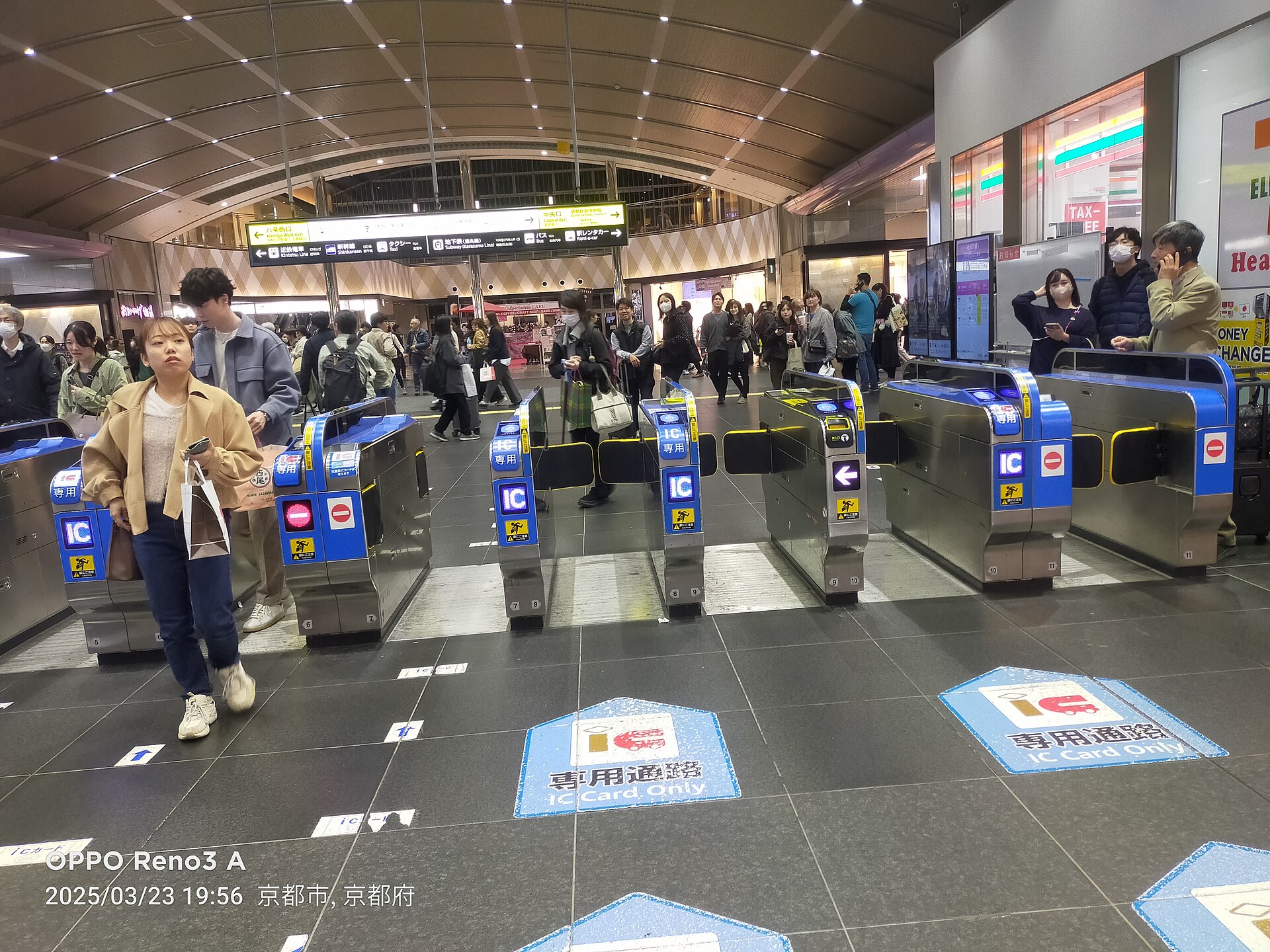
The ten major cards — Suica, PASMO, Kitaca, TOICA, manaca, ICOCA, PiTaPa, SUGOCA, nimoca and hayakaken — share one national mutual-use scheme. A Suica taps through the gates at Kyoto Station. An ICOCA works on the Tokyo subway. Sapporo, Sendai, Fukuoka and Naha accept the big cards too, including Okinawa's buses and its monorail.
The exception that proves the rule is PiTaPa, Kansai's post-paid card: it is issued to residents and is the one card that stays home when you leave Kansai. You will not be sold one as a visitor, so ignore it.
The plastic is not only for trains either. The same tap pays at convenience stores, vending machines, coin lockers and in a growing number of taxis, which is why a card with ¥1,000-2,000 on it is more useful than a pocket of coins.
Source: Wikimedia Commons · Mr.ちゅらさん, CC BY-SA 4.0

3What the card does not cover
- Shinkansen. An IC card alone will not get you onto a bullet train. You need a ticket, or an e-ticket service such as EX or SmartEX — and a registered card can be linked to those so that you tap through the Shinkansen gates as well.
- Limited expresses. The Skyliner (¥2,580 to Ueno), the Narita Express (¥3,140 to Tokyo), the Rapi:t (¥1,490 to Namba) and the Haruka are all reserved-seat trains with an express charge. A card covers the base fare only; you still buy the express ticket.
- Rural lines and a few bus companies are still cash-only. The gaps are shrinking, but they exist, so keep some coins on you outside the big cities.
- Top-up limits. A card holds ¥20,000 at most and a single machine top-up is ¥10,000. Machine top-ups are cash only — the machines do not take your credit card. The app is the credit-card route.
4What changed in 2026
Two things, and both affect what you pay.
First, the cards are simply back. JR East stopped selling plain Suica and PASMO in June 2023 because of the global chip shortage, and for two years most travellers had to hunt for a Welcome Suica. Sales of registered cards restarted in September 2024 and the ordinary cards came back on 1 March 2025. Any guide from 2023-24 telling you the machines are empty is out of date.
Second, fares went up. On 14 March 2026 JR East raised fares across its whole network for the first time since privatisation — about 7.8% on standard fares, with the minimum fare moving from ¥150 to ¥160. Short hops moved a lot: Ikebukuro to Shinjuku went from ¥167 to ¥199 on an IC card. A ¥1,000 top-up buys noticeably less than it did a year ago, so if you know Japan from before, budget roughly a tenth more for trains.
5What I would actually buy
- iPhone: Welcome Suica Mobile, or add Suica to Apple Wallet. Do it at home, top up with a card in Apple Pay, and skip both the machine queue and the ¥220 refund ritual. The app version is valid 180 days and can even be used for JR East Shinkansen non-reserved seats.
- Android from outside Japan: the physical card. Mobile Suica on Android depends on Osaifu-Keitai hardware, which in practice means a Japanese-market handset — so buy a Welcome Suica at the airport if you fly home within 28 days, or a normal Suica (¥500 deposit) if you want a card you can keep and reuse.
- A Kansai-only trip: ICOCA, bought at the same machines you walk past on the way to the train. Same features, same national coverage.
- Two cities in one trip: one card. Do not buy a second one in Osaka because you think the first one stops working. It does not.
Keep reading
- Narita vs Haneda vs Kansai: which airport lands you closest to your hotel — the times and fares, door to door.
- Japan's tax-free shopping changes on 1 November 2026 — the refund moves to the airport.
- All guides to Japan — the full index.
Sources
- JR East — Suica: deposits, refunds, and the rule that a card can only be returned to the company that issued it
- JR East — Welcome Suica: 28-day validity, sales locations, ¥20,000 limit, cash-only top-up
- JR East — Welcome Suica Mobile app (released 6 March 2025) and its terms
- JR West — ICOCA and HARUKA: purchase, deposit and refund rules
- JR East press releases — resumption of Suica and PASMO card sales, 1 March 2025
- Japan Times and News On Japan — JR East fare revision in force 14 March 2026