
Source: Wikimedia Commons · Uraomote yamaneko, CC BY-SA 3.0
Nikko is two railways that never meet and two passes that cover different mountains. The shrines are six minutes from the Tobu station by bus, the lake is 45 minutes above them, and the last bus down leaves at 20:02. Pick the pass first.
1Two railways, and only one of them takes the pass
Tobu runs to Nikko from Asakusa. JR runs there from Tokyo or Ueno: the Tohoku Shinkansen to Utsunomiya, then the JR Nikko Line, into a different station three minutes away on the same bus route. The NIKKO PASS is a Tobu product and covers nothing on the JR side.
SPACIA X No. 1 leaves Asakusa at 07:50 and reaches Tobu-Nikko at 09:39; No. 3 goes at 09:00 and arrives at 10:50. The last fast train back, No. 12, leaves at 17:44 and reaches Asakusa at 19:35.
On the pass alone you ride the local trains, which Tobu's leaflet puts at about three hours with a change. That is the trade: the ¥1,400 fare is covered and the morning is gone.

Source: Wikimedia Commons · くろふね, CC BY 4.0
The JR route runs a shinkansen to Utsunomiya and a single-track line, roughly hourly, with the last weekday departure from JR Nikko at 21:52. The JR TOKYO Wide Pass at ¥16,000 for three consecutive days covers it, and covers nothing on the Tobu side either.
2Which Tobu pass, and what it actually covers
| Pass | Adult / child | Valid | Buses it covers |
|---|---|---|---|
| NIKKO PASS world heritage area | ¥3,000 / ¥1,500 | 2 days | Tobu buses from Tobu-Nikko station as far as Rengeishi |
| NIKKO PASS all area | ¥8,000 / ¥4,000 | 4 days | Every Tobu bus in Nikko, up to Chuzenji, Ryuzu, Akanuma and Yumoto |
Both carry the same train cover: one return between Asakusa and Shimo-Imaichi on local trains, then unlimited travel from Shimo-Imaichi to Tobu-Nikko and Shin-Fujiwara. The mountain is what separates them. Rengeishi is the stop at the foot of the Irohazaka, and on the ¥3,000 pass that is the end of the line — the lake, the falls and Yumoto are all above it.
The all-area version adds the Lake Chuzenji cruise, mid-April to 30 November, the low-emission bus to Senjogahara, one bath at the Nikko Astraea Hotel and a four-ride lift at the Yumoto ski slope. Neither pass includes the express seat, shrine admission, Tobu World Square or Edo Wonderland. Both are sold to foreign travellers, from a month before travel.
3The train you actually want
Four limited expresses work the line: SPACIA X, and older Spacia cars running as Kegon to Tobu-Nikko and Kinu to Kinugawa-Onsen. Every seat is reserved, so the pass buys nothing on board.

Source: Wikimedia Commons · MaedaAkihiko, CC0
On the Kegon the seat is ¥1,650 on top of the ¥1,400 fare from Asakusa to Tobu-Nikko in normal season, ¥1,850 in the busy season and ¥1,450 off season: about ¥3,300 return. SPACIA X sits on a higher table of its own, where Kitasenju to Kinugawa is ¥1,400 of fare plus ¥1,940, with the cockpit lounge ¥500 a person.
That arithmetic decides the pass. One day on the lake bought singly is ¥6,100 of fares and seats plus ¥2,500 of bus, about ¥8,600. The all-area pass is ¥8,000 and still needs the ¥3,300 of seats, so ¥11,300. The four-day pass loses about ¥2,700 on a single day.
The ¥3,000 version is the other way round. A shrines day is ¥3,000 plus ¥3,300 of seats, against about ¥6,800 bought singly, so it lands roughly ¥500 ahead. Not a reason to buy it; a reason not to feel cheated.
4The loop that fits in one day
The 07:50 puts you at Tobu-Nikko at 09:39 with the bus stop ten paces from the ticket gate. Stop 2 runs up to the shrines: four minutes to Shinkyo at ¥220, six to Nishi-sando at ¥350.

Source: Wikimedia Commons · Jpatokal, CC BY-SA 4.0
Three shrines, three ticket windows. Toshogu is ¥1,600 for the Yomeimon, the main hall and the climb to the Okumiya. Rinnoji is ¥400 for the Sanbutsudo and ¥550 for the Taiyuin, or ¥900 for both. Futarasan's precinct is free to walk, with ¥500 for the garden, and Shinkyo is ¥300 to cross.
Then back to the stop for the mountain: 45 to 50 minutes to Chuzenji-onsen at ¥1,250, the falls a five-minute walk from the bus stop and ¥600 for the elevator down. The last bus off the lake is 20:02, at the station by 20:38.
Everything above the lake does not fit. Ryuzu Falls is ¥1,600 from the station, Akanuma ¥1,700 and Yumoto ¥1,950, each another 20 to 40 minutes up a road that stops moving in November.
5The buses up the Irohazaka
One operator, one fare table, paid as you get off.
| Stop | Adult, one way | Ride |
|---|---|---|
| Shinkyo / Nishi-sando | ¥220 / ¥350 | 4 and 6 minutes |
| Akechidaira | ¥1,250 | About 35 minutes |
| Chuzenji-onsen | ¥1,250 | 45 to 50 minutes |
| Ryuzu Falls / Akanuma | ¥1,600 / ¥1,700 | About an hour |
| Yumoto-onsen | ¥1,950 | About 75 minutes |
Exact change only: no notes of 10,000, 5,000 or 2,000 yen, and no change given. An IC card works instead, and the world heritage pass covers this route as far as Rengeishi and no further.

Source: Wikimedia Commons · ブルーノ・プラス, CC BY-SA 4.0
The road is the bottleneck. Nikko's congestion guidance puts the worst of the Irohazaka between 09:00 and 15:00, later at weekends in leaf season, and warns that 14:00 to 15:00 can turn a 20-minute climb into three hours. Before 07:00 at a weekend, or after 15:00 on a weekday, it moves.
Akechidaira, the viewpoint over the hairpins, has been shut since 15 January 2026 for a rebuild, with reopening planned for September 2027. The bus still stops; the terrace is a building site.
The last bus down reaches Tobu-Nikko at 20:38, nearly three hours after the last SPACIA X left, so a late finish means the local train the pass covers.
6Opening hours move with the season
| Place | April to October | November to March | Admission |
|---|---|---|---|
| Toshogu | 09:00–17:00 | 09:00–16:00 | ¥1,600 / ¥550 child |
| Rinnoji | 08:00–17:00 | 08:00–16:00 | ¥400 Sanbutsudo, ¥550 Taiyuin, ¥900 both |
| Futarasan | 08:00–17:00 | 09:00–16:00 | Free, garden ¥500 / ¥200 |
| Shinkyo | 08:30–16:30 | 09:30–15:30 | ¥300 / ¥200 / ¥100 |
| Kegon Falls elevator | 08:00–17:00, to 30 Nov | 09:00–16:30 | ¥600 / ¥400 child |
Every counter closes 30 minutes before the gate, and Rinnoji closes its combined ticket earlier still: 14:30 in summer, 13:30 from November. A shrine-first morning is not a preference in Nikko; it is the only order that works once the clocks go back.

Source: Wikimedia Commons · Saigen Jiro, CC0
7When the leaves are at their peak
Nikko runs on altitude. The city's forecast for 2026 puts Yumoto and Ryuzu at the top in early to mid October, Senjogahara's larches mid to late October, the lake, the falls and the Irohazaka from mid October into early November, and the shrines last, in the first half of November.

Source: Wikimedia Commons · くろふね, CC BY-SA 4.0
On the 26 October update the shrines were only starting while the lake was at its best, which is the usual shape of the season. That ten days is the window where one day trip catches two stages.
Winter is quieter. The elevator shortens to 09:00 to 16:30 from December to February, the spray freezes on the rock, and the shrine roofs carry snow with a tenth of the crowd.
8Money and small practicalities
An IC card for the buses and the station shops, coins for the shrine windows. The tourist centre at Tobu-Nikko sells admission from a machine that takes IC cards and credit, which saves the gate queue on a November morning.
A suitcase has no place on a 45-minute mountain bus, and the station lockers go first on a leaf weekend. Send the bag ahead instead: the luggage forwarding guide has the counter hours and cut-offs.
The digital pass is scanned from a phone at the bus door, so a dead battery is a fare, and the driver wants to see it getting on and off, both directions.
9Where to stay if one day is not enough
The station front at Tobu-Nikko suits anyone who wants a second morning at the shrines without a 06:00 alarm: the bus stop and the ticket window are minutes from the platform.
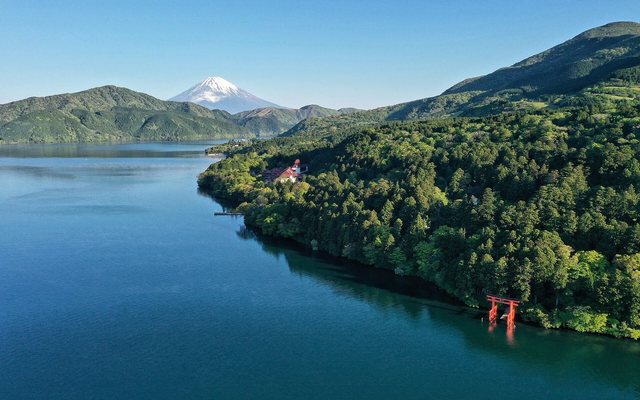
Chuzenji-onsen is for the lake. The buses unload at ten and the last one down goes at 20:02, which leaves the water to the gulls again in the late afternoon, with the pier, the falls and the walks on foot from the stop.
Yumoto, at the top of the line, is for the marsh and the baths, with Senjogahara's boardwalks a couple of stops below. Two nights up there and the four-day pass pays for itself. One night and you have bought it for an afternoon.
| For the Nikko day | Why before you go | Check tickets |
|---|---|---|
| Hotel in Asakusa | The 07:50 leaves from Tobu Asakusa; a room within walking distance is the difference between the first bus up the mountain and the queue for the second | Trip.com |
| Airport transfer into Asakusa | A same-day arrival from Narita or Haneda does not make the 07:50, so the transfer has to land the night before | Kiwitaxi |
| Japan eSIM | The bus timetable, the leaf status and the ropeway closure are pages to check on the morning, not before you fly | Airalo |
10Questions and answers
The pass arithmetic, the seat on the train, and the last bus down.
Can Nikko be done in a day from Tokyo?
Yes, on the Tobu line and only with the limited express. The 07:50 SPACIA X reaches Tobu-Nikko at 09:39, the shrines are six minutes away by bus, and the last fast train back leaves at 17:44. That is a shrine morning, a lake afternoon, and the 20:02 bus down.
Is the Tobu NIKKO PASS worth it for one day?
For the shrines, roughly: the ¥3,000 two-day pass plus ¥3,300 of Kegon seats is about ¥6,300, against ¥6,800 for fares, seats and buses bought singly. For the lake, no: the four-day ¥8,000 pass plus the seats is about ¥11,300, against ¥8,600 as singles. The all-area pass needs a third day.
Should I take the Tobu line or JR?
Tobu from Asakusa if you are staying on the east side or buying the pass. JR from Tokyo or Ueno if you hold a JR pass: the shinkansen to Utsunomiya and the JR Nikko Line reach a different station three minutes away on the same bus route. Neither pass covers the other company's line.
Do I need to book the Spacia X in advance?
Yes. Every seat on SPACIA X, Kegon and Kinu is reserved and the pass includes none of them. From Asakusa to Tobu-Nikko the charge is ¥1,650 in normal season, ¥1,850 in the busy season and ¥1,450 off season, on top of the ¥1,400 fare.
What time does Toshogu open and close?
09:00 to 17:00 from April to October and 09:00 to 16:00 from November to March, with the counter closing 30 minutes before the gate. Admission is ¥1,600 for adults and high school students, ¥550 for children.
When are the leaves at their peak?
It depends where you stand. Yumoto and Ryuzu peak in early to mid October, Senjogahara mid to late October, the lake and the Irohazaka from mid October into early November, the shrines in the first half of November. Late October catches the lake and the shrines in one trip.
Nikko or Kamakura?
Kamakura is the shorter, cheaper day and needs no pass arithmetic. Nikko is the bigger one: two hours each way on the express, a bus up a mountain road, and three separate shrine tickets once you are there. Take Kamakura when you want to be back for dinner.
Can children or older travellers do the day?
The shrine circuit is stairs and gravel, and the climb to Toshogu's Okumiya is a long flight of stone steps. The Nishi-sando buses cut most of the walk, the lake is flat once you are off the bus, and the Kegon elevator is 100 metres down and back in a minute. Skip the Okumiya.
Keep reading


Sources
- Tobu Railway — NIKKO PASS: the world heritage area pass at ¥3,000 adult and ¥1,500 child for two days, the all area pass at ¥8,000 and ¥4,000 for four days, one return trip between Asakusa and Shimo-Imaichi on local trains, unlimited travel between Shimo-Imaichi, Tobu-Nikko and Shin-Fujiwara, and the exclusion of the limited express ticket, shrine admission, Tobu World Square and Edo Wonderland; the sale window of one month before travel and the foreign-traveller condition (tobu.co.jp/en/ticket/nikko/all.html and /city.html)
- Tobu Railway — NIKKO PASS pamphlet: the world heritage area bus zone running only between Tobu-Nikko station and the Rengeishi bus stop, the all area covering every Tobu bus in Nikko, and that the pass covers local trains only, which take about three hours and require a change (tobu.co.jp/en/data/pdf/information/discountpass_en.pdf)
- Tobu Railway — SPACIA X timetable: Asakusa 07:50 to Tobu-Nikko 09:39, Asakusa 09:00 to Tobu-Nikko 10:50, and Tobu-Nikko 17:44 to Asakusa 19:35, all seats reserved (tobu.co.jp/spaciax/en/guide)
- Tobu Railway — limited express fare tables for the Nikko and Kinugawa direction, normal, busy and off-peak seasons: the ¥1,400 fare between Asakusa and Tobu-Nikko with a standard-seat charge of ¥1,650, ¥1,850 and ¥1,450 by season, and the worked example of Kitasenju to Kinugawa at ¥1,400 plus ¥1,940 with the cockpit lounge at ¥500 (tobu.co.jp/railway/special_express/transit_fare/ and the spacia_nikko fare PDFs)
- Tobu Bus — Nikko timetable and fare table, fares current as of 1 April 2025: Shinkyo ¥220, Nishi-sando ¥350, Kirifuri Falls ¥380, Kirifuri Kogen ¥850, Akechidaira and Chuzenji-onsen ¥1,250, Ryuzu Falls ¥1,600, Akanuma ¥1,700, Kotoku-onsen ¥1,900, Yumoto-onsen ¥1,950; the 45-to-50-minute run from Tobu-Nikko to Chuzenji-onsen; the last bus down from Chuzenji-onsen at 20:02 reaching Tobu-Nikko at 20:38; payment on exit with no change given and no 10,000, 5,000 or 2,000 yen notes accepted (tobu.co.jp/en/ticket/nikko/pdf/nikko_timetable.pdf)
- Tobu Railway — bus information for Tobu Nikko station: the Kegon Falls and Lake Chuzenji stops a five-minute walk from the bus stop, and the standard run times to Shinkyo and Nishi-sando (tobu.co.jp/en/access/nikko/bus_nikko.html)
- JR East — Nikko station timetable, Nikko Line toward Utsunomiya, weekdays: departures about once an hour with the last at 21:52; and the JR TOKYO Wide Pass at ¥16,000 adult for three consecutive days, covering JR East lines, the Nikko Line and the through limited express from Omiya to Tobu-Nikko, with the Tobu line from Asakusa excluded (timetables.jreast.co.jp/en/timetable/list1180.html and jreast.co.jp/en/multi/pass/tokyowidepass.html)
- Nikko Toshogu — admission and hours: 09:00 to 17:00 from April to October and 09:00 to 16:00 from November to March, the counter closing 30 minutes before, ¥1,600 for adults and high school students and ¥550 for children, and the ¥2,400 set with the treasure house (toshogu.jp/pages/25)
- Rinnoji — hours and ticket prices: 08:00 to 17:00 from April to October and 08:00 to 16:00 from November to March with reception 30 minutes before closing, the Sanbutsudo at ¥400, the Taiyuin at ¥550, the two-hall set at ¥900 with reception to 14:30 in summer and 13:30 in winter, and the three-hall set at ¥1,000 (rinnoji.or.jp/information.html)
- Nikko City Tourism Association — Futarasan Jinja at 08:00 to 17:00 from April to October and 09:00 to 16:00 from November to March with the garden at ¥500 and ¥200; Shinkyo at 08:30 to 16:30 from April to October and 09:30 to 15:30 from November to March with the crossing at ¥300, ¥200 and ¥100; and the autumn-leaf forecast by elevation for 2026, updated 26 and 27 October (nikko-kankou.org/spot/4, /spot/21 and /flowering/autumn-leaves)
- Nikko City Tourism Association — Irohazaka congestion guidance for 2026: the 09:00 to 15:00 window, later at weekends in leaf season, with the 14:00 to 15:00 hour able to add three hours, and the advice to climb before 07:00 at weekends or after 15:00 on a weekday (nikko-kankou.org/features/72)
- Kegon Falls elevator — hours and fares: 08:00 to 17:00 from 1 March to 30 November and 09:00 to 16:30 from 1 December to 28 February, ¥600 for adults and ¥400 for primary school children, return (kegon.jp/info)
- Nikko Kotsu — Akechidaira Ropeway notice: suspended since the close of business on 15 January 2026 for renewal works, with reopening planned for September 2027 (nikko-kotsu.co.jp/ropeway)
- Photographs: Lake Chuzenji, Uraomote yamaneko, CC BY-SA 3.0; the Yomeimon gate, Jpatokal, CC BY-SA 4.0; Shinkyo, Saigen Jiro, CC0; SPACIA X, MaedaAkihiko, CC0; Tobu-Nikko station and Kegon Falls, くろふね, CC BY 4.0 and CC BY-SA 4.0; the Chuzenji boat station, ブルーノ・プラス, CC BY-SA 4.0 — all via Wikimedia Commons