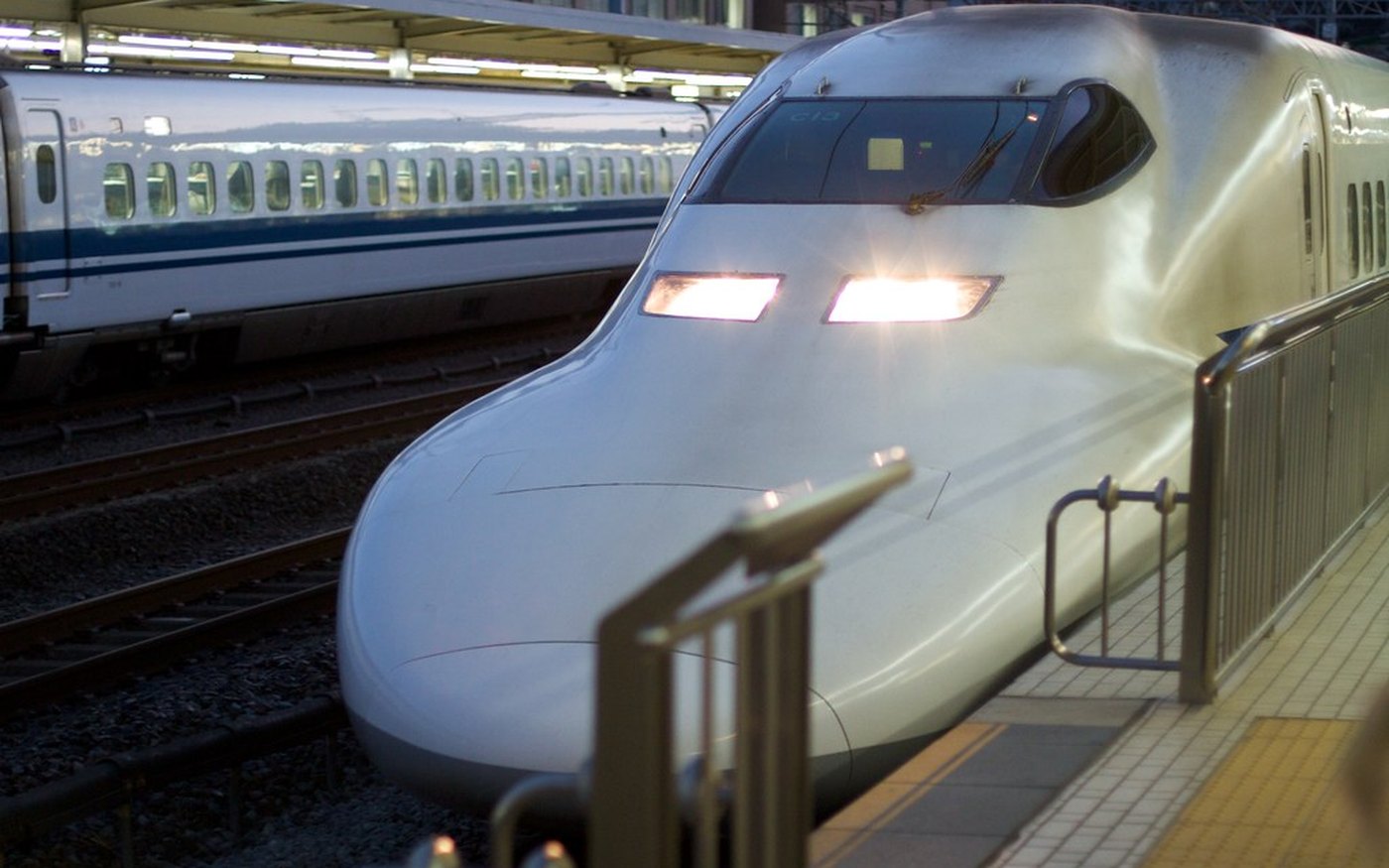
Source: Flickr · public domain mark
Japan Railways now runs two price lists for the same plastic. The 7-day pass bought on japanrailpass.net costs ¥50,000; the same pass bought from a travel agency outside Japan costs ¥53,000, because the agency price went up on 1 October 2026 and the online price didn't. Which of the two you hand your money to is the first decision, and the second is whether a pass is worth having at all — it needs about three and a half long rides from a standing start.
- ¥50,000
- 7 days, adults, on the official siteOrdinary car, japanrailpass.net
- ¥53,000
- 7 days, adults, overseas agencyRose on 1 October 2026
- 3.6
- Tokyo–Kyoto singles to break even¥13,850 per Hikari reserved seat
- ¥4,960
- Added per NOZOMI rideTokyo or Shinagawa to Kyoto
1The two 2026 price lists
The pass is sold in one shape — 7, 14 or 21 consecutive days, ordinary car or Green Car — the price depends entirely on which counter it comes from. The online service is JAPAN RAIL PASS Reservation, run by JR Group, and its prices have been frozen “for a limited time” since the last rise in October 2023. Overseas agencies sell an Exchange Order at their own price, and that's the list that moved.
| Pass | Official website | Overseas agency | Difference |
|---|---|---|---|
| 7-day, ordinary | ¥50,000 | ¥53,000 | +¥3,000 |
| 14-day, ordinary | ¥80,000 | ¥84,000 | +¥4,000 |
| 21-day, ordinary | ¥100,000 | ¥105,000 | +¥5,000 |
| 7-day, Green Car | ¥70,000 | ¥74,000 | +¥4,000 |
| 14-day, Green Car | ¥110,000 | ¥116,000 | +¥6,000 |
| 21-day, Green Car | ¥140,000 | ¥147,000 | +¥7,000 |
Children aged 6 to 11 pay half, and the same split runs through both lists: ¥25,000 against ¥27,000 for a child's 7-day ordinary pass, ¥35,000 against ¥37,000 in the Green Car. Under six, no ticket at all.
The increase was announced on 9 April 2026 and takes “purchases made on or after October 1, 2026” as its trigger, by the local time where you buy. Travel dates are irrelevant: a pass bought on 30 September at the old price is valid whenever you use it.
2Covered and excluded trains in 2026
Ordinary cars on every JR shinkansen except the two fastest services, plus JR limited expresses, express trains, local trains, the JR BRT bus line in the Tohoku disaster area, the JR West ferry to Miyajima (with the ¥100 visitor tax on top), regional JR buses from Hokkaido down to Kyushu, and the Tokyo Monorail to Haneda. A Green Car pass covers Green Car seats on the same trains.
What it never covers: NOZOMI and MIZUHO on the Tokaido, Sanyo and Kyushu shinkansen, where the pass buys you nothing at all — not a reserved seat, not a non-reserved one, not a Green seat — unless you pay the add-on below. Then GranClass on the Hokuriku shinkansen, where the pass covers the basic fare only; DX Green and Premium Green, which carry an extra charge; sleeper berths and private compartments; the Home-Liner commuter service; and anything on a private railway, which is most of the lines you will actually take inside a city.
Two non-JR tracks sit in the middle: the Aoimori Railway, IR Ishikawa Railway, Ainokaze Toyama Railway and Hapi-Line Fukui are covered only when your train runs through without stopping off.
3The 2026 NOZOMI supplement
NOZOMI and MIZUHO are the only Shinkansen a pass holder can't board for free, and the supplement is a flat add-on per ride that doesn't depend on the seat class — Green car, reserved and non-reserved cost the same. JR sells it only inside Japan, from one month before the boarding date.
| Section | Add-on per ride |
|---|---|
| Tokyo or Shinagawa to Kyoto | ¥4,960 |
| Tokyo or Shinagawa to Shin-Osaka | ¥4,960 |
| Tokyo to Nagoya | ¥4,180 |
| Tokyo or Shinagawa to Hiroshima | ¥6,500 |
| Shin-Osaka to Hakata | ¥4,960 |
| Hakata to Kagoshima-Chuo | ¥5,150 |
The arithmetic that decides most trips: a Tokyo–Kyoto NOZOMI with the add-on costs the pass holder ¥4,960 on top of a ¥50,000 outlay, while the HIKARI on the same route leaves 20 minutes later and costs nothing extra. Two NOZOMI rides and you have spent a tenth of the pass on speed.
4What breaks even in 2026
These are the ordinary-car reserved fares a pass has to beat, read for the regular season. The count on the right is ¥50,000 divided by the fare: that many single rides and the pass has paid for itself.
| Route, one way | Reserved seat | Rides to pay off |
|---|---|---|
| Tokyo to Kyoto | ¥13,850 | 3.6 |
| Tokyo to Shin-Osaka | ¥14,400 | 3.5 |
| Tokyo to Kanazawa | ¥14,600 | 3.4 |
| Tokyo to Hiroshima | ¥18,910 | 2.6 |
| Shin-Osaka to Hiroshima | ¥10,420 | 4.8 |
A Tokyo–Kyoto return is ¥27,700, which isn't half a pass. Add Osaka, a Nara or Himeji day trip and the trip home, and the 7-day pass turns over somewhere in the second half of that week. The pattern that pays: land in Tokyo, ride west, ride back with a stop on the way. The pattern that doesn't: one city, one return leg, city subways. And the subways are never covered.
Work out your own itinerary in the JR Pass break-even calculator: add routes, it prices them at these fares and tells you what the pass saves.
5Whether the 2026 Green Car is worth its premium
A 7-day Green Car pass is ¥70,000 on the official site and ¥74,000 through an agency — 40% above the ordinary pass for a bigger seat, more legroom, a quieter car and, on the Tokaido line, a car that fills up last. On a Tokyo–Kyoto single the Green seat sells for ¥18,720 against ¥13,850 ordinary, so the upgrade is worth ¥4,870 a ride and the pass needs fewer than five such rides to justify itself against paying ordinary fares and buying Green seats separately. For a two-week trip that's one ride every other day.
6Where to buy in 2026, and the reservation rule
Two channels and no third one. japanrailpass.net sells online, and a travel agency outside Japan sells an Exchange Order; JR lists no counter inside Japan as a sales point, only as a place to pick up or exchange. Buying online does something the agency route can't: online reservations of shinkansen and limited-express seats are exclusive to passes bought on japanrailpass.net, booked from 10:00 Japan time exactly one month before the boarding date and up to six minutes before departure.
But an Exchange Order buyer waits. The voucher has to be turned into the actual pass at a JR office or ticket machine once in Japan, and only then can seats be reserved, at a counter. On a December trip between two cities that's the difference between choosing your train at home and queueing for it at Tokyo Station.
What the marketplaces sell, and what changes when you buy there
| Seller | What it's | Buy |
|---|---|---|
| Klook | The agency channel, priced in US dollars, so the rate moves week to week — it can land above or below the yen list price | Klook |
| KKday | Same channel, same Exchange Order, turned into the pass at a JR office after you land | KKday |
| Trip.com | Electronic ticket rather than paper, delivered to the app before you fly | Trip.com |
All three are the agency route, so the rule in the paragraph below applies: no online seat reservations, and a pass that has to be activated after you land.
Both channels carry the same ceiling: reservations for more than 110 trains can't be issued on one pass, and cancelling a reservation doesn't hand the slot back. A purchase on the official site covers up to six passes in one booking and up to 50 per purchaser.
7What I would do
Two long-distance legs in one direction and a return, inside seven days: buy on japanrailpass.net, at ¥50,000, and reserve the seats at the same time. One city with a single day trip out of it: skip the pass and buy the tickets, because the pass needs three and a half Tokyo–Kyoto rides before it's cheaper and a single return is two.
If you buy through an agency anyway — because you want it bundled, or because you're paying in a currency you already hold — the ¥3,000 difference buys you one thing: nothing the online route doesn't already include. Take the online price and the reservation window it comes with.
Keep reading
Sources
- Japan Railways Group — the official price list at japanrailpass.net/en/purchase/price: ¥50,000 / ¥80,000 / ¥100,000 for adult ordinary 7/14/21-day passes bought online, ¥70,000 / ¥110,000 / ¥140,000 for the Green Car passes, the child prices, and the overseas-agency prices of ¥53,000 / ¥84,000 / ¥105,000 and ¥74,000 / ¥116,000 / ¥147,000 that apply to purchases made on or after 1 October 2026.
- Japan Railways Group — the price-change notice of 9 April 2026 (JRP_Price_Changes_En.pdf): the ¥3,000–¥7,000 rises on agency sales, the rule that the online price “will remain unchanged for a limited time”, and the trigger being the purchase date by local time.
- Japan Railways Group — the NOZOMI/MIZUHO Ticket page at japanrailpass.net/en/use/special-ticket: the flat supplements of ¥4,960 (Tokyo or Shinagawa–Kyoto, Tokyo or Shinagawa–Shin-Osaka, Shin-Osaka–Hakata), ¥4,180 to Nagoya, ¥6,500 to Hiroshima and ¥5,150 for Hakata–Kagoshima-Chuo, all identical in Green, reserved and non-reserved cars, sold only in Japan and only from one month before boarding.
- JR Central — the online-booking page for the NOZOMI/MIZUHO Ticket, which repeats the same supplements and the one-month sales window.
- Japan Railways Group — the conditions of use at japanrailpass.net/en/use/conditions-for-use: the covered services (JR shinkansen except NOZOMI and MIZUHO, limited expresses, the JR West Miyajima ferry with the ¥100 visitor tax, JR buses in eight regions, the Tokyo Monorail), the exclusions (GranClass beyond the basic fare, DX and Premium Green, sleeper berths, Home-Liner, TRAIN DESK), the 110-reservation ceiling, and the rule that pass-through travel on the Aoimori, IR Ishikawa, Ainokaze Toyama and Hapi-Line Fukui tracks is included.
- japanrailpass.net/en/about_jrp/vehicle — the train list marking NOZOMI and MIZUHO as unusable and naming HIKARI, SAKURA, KODAMA and TSUBAME as the covered fast services.
- japanrailpass.net/en/purchase — the two purchase channels, online or an overseas travel agency, with JR stations listed only as pick-up and exchange locations.
- Japan Rail Pass Reservation (japanrailpass-reservation.net) — the booking window of 10:00 Japan time one month before boarding to six minutes before departure, the limit of six passes per booking, and the 50-pass ceiling per purchaser.
- Point-to-point shinkansen fares — the operator doesn't publish a plain English fare table, so the singles used in the break-even table come from JR-derived fare tables (jr-shinkansen.net, JR's own seasonal surcharge bands; jr-group.jp) read as of April 2026 and reconcile with Japan-guide. Treat them as the one set of figures here that needs a second look at a JR fare search before you buy, and check the seasonal bands: peak-season surcharges add a few hundred yen to each figure.
- Every other price, date and rule in this guide was read from JR's own pages on 16 October 2026. The calculator on this site uses the same figures.